













New Diet Trick: Eat More Air
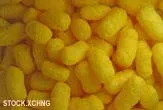
Air is a key ingredient that can cut some calories from snacks, a team of nutritionists claims.
The researchers invited people who were not on diets to snack on as many cheese puffs as they wanted over the course of four afternoons. One group munched on dense Cheetos, while others munched on the puffier, more aerated ones.
Although the group snacking on the more aerated puffs ate more by volume, they ended up consuming 21 percent fewer calories on average, according to results detailed in the May issue of the journal Appetite.
Something to learn from
There are 160 calories per ounce in even the puffy version of Cheetos, and no responsible doctor would recommend them as a regular part of a healthy diet. But there is something to learn from the puffy factor.
“You can trick your senses into believing you’ve eaten more food by pumping up the volume,” said lead researcher Barbara Rolls of Pennsylvania State University. By choosing snacks that contain more air, “you’re going to get more food by volume and fewer calories.”
Savory snacks aren’t the only foods that vary in the amount of air they contain, Rolls told LiveScience.
Get the world’s most fascinating discoveries delivered straight to your inbox.
Cereals are another biggie. Eating puffier, irregularly-shaped cereals are a better bet than dense, tightly-packed cereals like muesli or granola, she said. “If you’re pouring the inappropriate amount on the basis of how full the bowl is, you’re going to get easily three times as many calories with the granola-type food,” she said.
Rolls is the author of two newly published books about “volumetrics,” an approach to weight control that focuses on energy density or the concentration of calories in each portion of food. A food’s energy density can be calculated by dividing the number of calories in a serving size by its weight in grams, as indicated in the nutrition information. Lower numbers indicate lower caloric densities—the types of snacks you should reach for first. But this calculation doesn’t incorporate the potential effects of aeration, because even though more aerated snacks are less dense, the extra air doesn’t add weight.
Separate research at Cornell University found that people who ate Chex Mix from large bowls consumed 56 percent more than those who munched from the smaller bowls.
Why?
The remaining question is why, exactly, people snacking on less dense foods consume fewer calories. There are two possible answers, said Paul Rozin, a psychologist at the University of Pennsylvania who was not involved in the study.
“One is that the stomach is filled more by the volume, and so it’s giving more of a signal to the body to say ‘that’s enough,’” Rozin said. The other possibility is that you’re actually imagining that you’ve eaten more, since each piece is larger, he said.
The reasons, however, may not be that crucial. The bottom line is that people are consuming fewer calories, Rozin said.