














This May Be the Face of a Pictish Chieftain Who Was Brutally Murdered 1,400 Years Ago

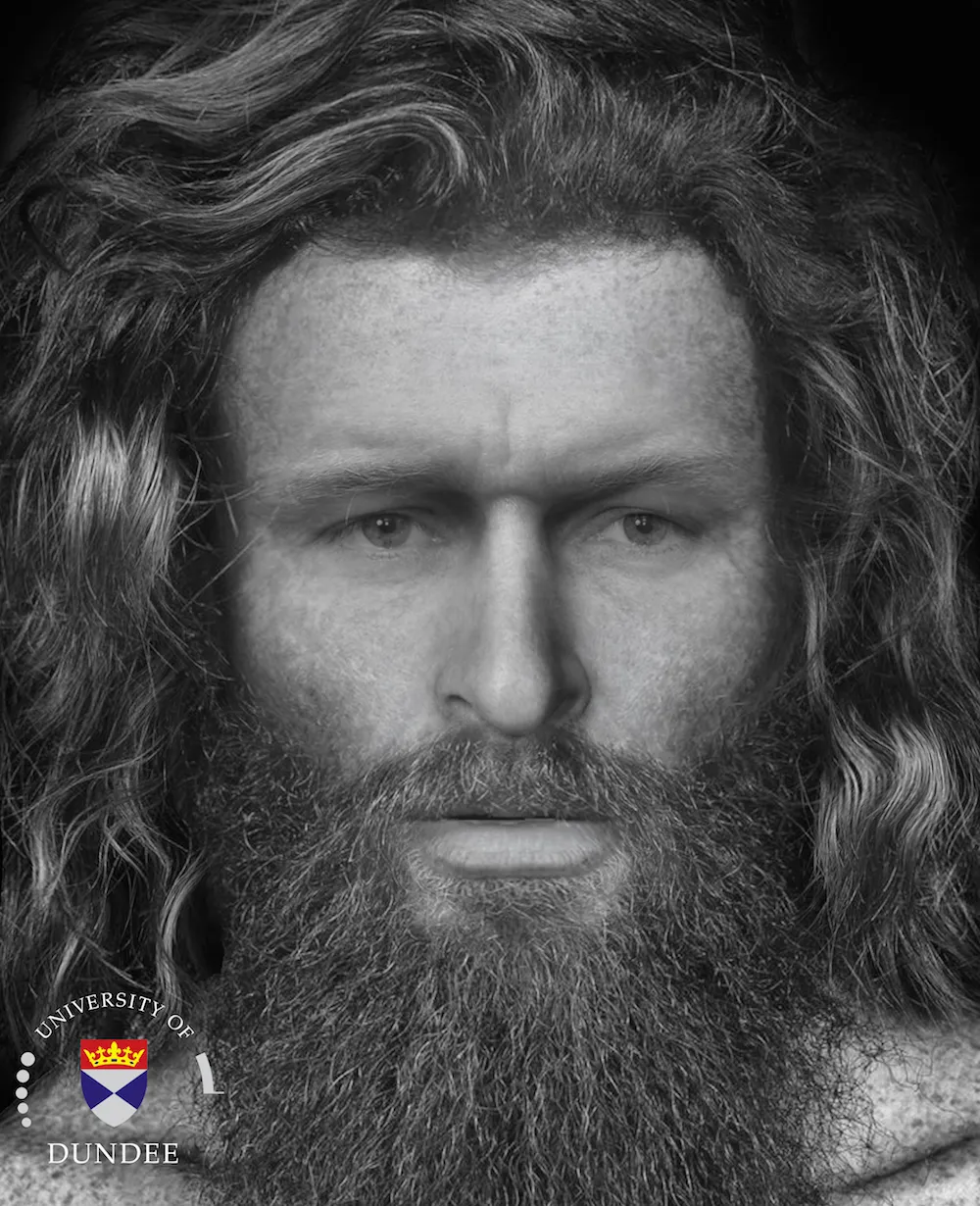
A Pictish man with a rugged face who was brutally murdered 1,400 years ago may have been royalty, new research finds.
After his murder, the approximately 30-year-old man's remains sat undisturbed in a cave on the Black Isle of the Scottish Highlands for more than a millennia. Archaeologists found the man's skeleton in a strange position; rocks pinned down his arms and legs, his skull was fractured, and his legs were crossed. Forensic artists published a virtual reconstruction of his face in 2017, catapulting him into internet fame.
Now, a new analysis indicates that this fellow, known as Rosemarkie Man, was likely a prominent person in his community, perhaps a member of royalty or a chieftain, according to news sources. [Photos: See the Ancient Faces of a Man-Bun-Wearing Bloke and a Neanderthal Woman]
The Picts were a group of tribes that lived in what is now Scotland during the Iron Age and Medieval times. They routinely fought against the Romans, who dubbed these tribes "Picts," likely from the Latin word "picti," which means "painted ones," as the Picts had distinctive tattoos and war paint.
This particular Pict was well off, according to an analysis of his remains. "He was a big, strong fella — built like a rugby player — very heavily built above the waist," Simon Gunn, a professor of urban history at the University of Leicester, who is studying the man's remains, told The Scotsman.
The 5-foot-6-inch-tall (167 centimeters) man ate a high-protein diet (it's almost like he was "eating nothing but suckling pigs," Gunn said), which was rare for people in that region during that time, The Scotsman reported.
A radiocarbon-dated bone sample shows that the man died between A.D. 430 and 630, Gunn said. Moreover, piles of animal bones found near the man's remains suggest that there was a celebration or ritual in honor of his passing, Gunn said.
Get the world’s most fascinating discoveries delivered straight to your inbox.
There were other clues that Rosemarkie Man was royal. Besides his head wounds, there were no other injuries on his body, suggesting that he wasn't a warrior or someone who labored for his livelihood. What's more, his burial in the cave may have been purposeful; perhaps his undertakers placed him at a place they believed was an entrance to the underworld, Gunn said.
Gunn said he and his colleagues plan to continue looking for new finds, as part of the Rosemarkie Caves Project. So far, they have evidence that these caves were used as long as 2,300 years ago, he said.
- Photos: The Reconstruction of Teen Who Lived 9,000 Years Ago
- In Photos: Scotland's Cave of the Dead
- In Photos: Intricately Carved Stone Balls Puzzle Archaeologists
Originally published on Live Science.

Laura is the managing editor at Live Science. She also runs the archaeology section and the Life's Little Mysteries series. Her work has appeared in The New York Times, Scholastic, Popular Science and Spectrum, a site on autism research. She has won multiple awards from the Society of Professional Journalists and the Washington Newspaper Publishers Association for her reporting at a weekly newspaper near Seattle. Laura holds a bachelor's degree in English literature and psychology from Washington University in St. Louis and a master's degree in science writing from NYU.