














Rare Tick-Borne Disease Tied to New Jersey Man's Death

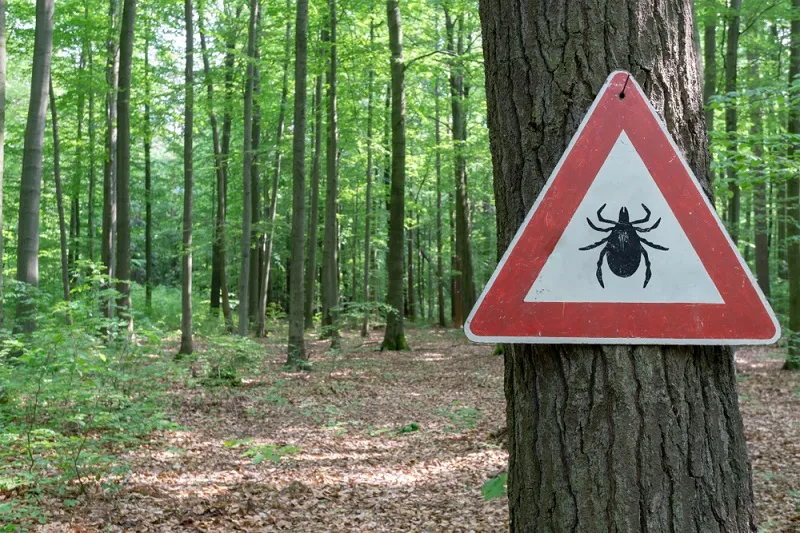
A rare tick-borne virus may have sickened two people in New Jersey, killing one, according to news reports.
Both individuals lived in Sussex County and tested positive for Powassan virus, a rare but often serious viral infection spread by ticks, according to the New Jersey Herald. One of those patients died in May, although officials have not confirmed the cause of death, the Herald reported. The other patient is recovering at home, according to New Jersey officials.
The names of the patients have not been released, but Sussex County resident Dianne Desormeaux Rude told the Herald that her father's death was recently linked to Powassan virus.
Her father, 80-year-old Armand Desormeaux, came down with a high fever in early May, and his condition quickly deteriorated. "He was having seizures, shaking uncontrollably," Rude said. About two weeks before falling ill, he was bitten by a tick while gardening, she said. He died on May 16. [10 Bizarre Diseases You Can Get Outdoors]
Although many people infected with Powassan virus don't develop symptoms, the virus can cause serious complications, including inflammation of the brain (encephalitis) and inflammation of the membranes surrounding the brain and spinal cord (meningitis), according to the Centers for Disease Control and Prevention (CDC). Symptoms can include fever, headache, vomiting, confusion, loss of coordination and seizures.
Between 2008 and 2017, only about 11 cases of Powassan virus with neurological symptoms (known as neuroinvasive disease) were reported each year, on average, in the U.S., according to the CDC. However, reports of Powassan virus have been increasing in recent years: in 2017, there were 33 reported cases of neuroinvasive disease tied to the virus. Most cases have occurred in the Northeast and Great Lake region.
The best way to prevent Powassan virus infection is to protect yourself from tick bites, the CDC says. Measures such as avoiding walking in wooded and bushy areas, applying insect repellent, wearing long pants, and checking your body for ticks after being outdoors can help prevent tick bites.
Get the world’s most fascinating discoveries delivered straight to your inbox.
Originally published on Live Science.

Rachael is a Live Science contributor, and was a former channel editor and senior writer for Live Science between 2010 and 2022. She has a master's degree in journalism from New York University's Science, Health and Environmental Reporting Program. She also holds a B.S. in molecular biology and an M.S. in biology from the University of California, San Diego. Her work has appeared in Scienceline, The Washington Post and Scientific American.