













In Photos: A Look at China's Space Station That's Crashing to Earth
Roomy quarters?

The space lab was designed to be a habitable station — it's 530 cubic feet (15 cubic meters) inside — for docking and orbital experiments, according to the Aerospace Corporation. The lab has two sleep areas for astronauts.
Here, commander Jing Haipeng waves to a camera after boarding the Tiangong 1 space module following a successful June 18, 2012 docking.
Space junk
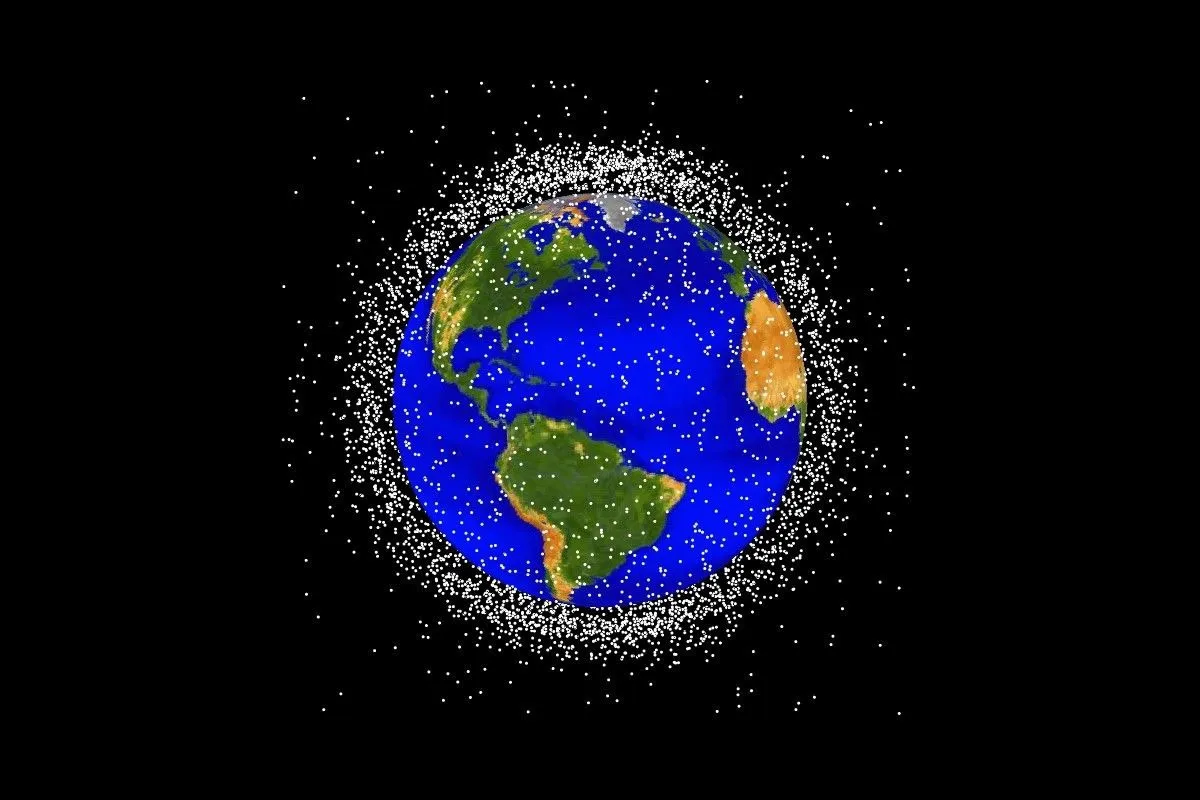
Bits of Tiangong-1 reentering Earth's atmosphere will make up just one of lots and lots of space debris orbiting our planet. About 500,000 pieces of debris are orbiting Earth, and about 20,000 of those are bigger than a softball.
Get the world’s most fascinating discoveries delivered straight to your inbox.
Jeanna Bryner is managing editor of Scientific American. Previously she was editor in chief of Live Science and, prior to that, an editor at Scholastic's Science World magazine. Bryner has an English degree from Salisbury University, a master's degree in biogeochemistry and environmental sciences from the University of Maryland and a graduate science journalism degree from New York University. She has worked as a biologist in Florida, where she monitored wetlands and did field surveys for endangered species, including the gorgeous Florida Scrub Jay. She also received an ocean sciences journalism fellowship from the Woods Hole Oceanographic Institution. She is a firm believer that science is for everyone and that just about everything can be viewed through the lens of science.