













Nepotism Rules Among Spiders

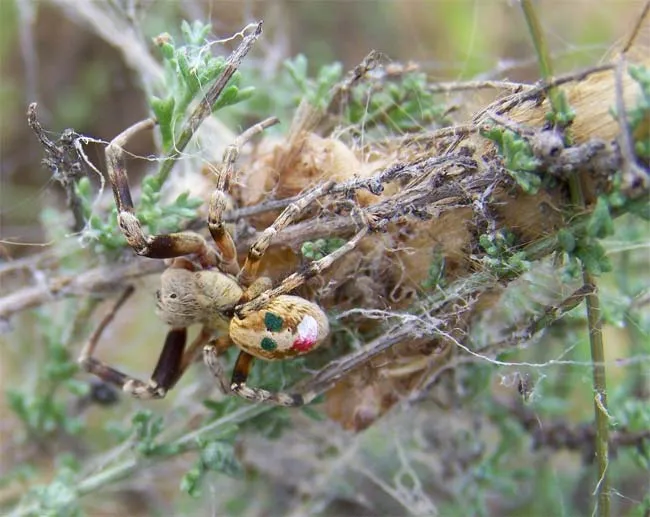
Favoring relatives in the workplace is socially taboo, but working with kin may have evolutionary advantages, according to a new study on spiders.
The findings show that some spiders cooperate better, and are more efficient at foraging for food, when they are related to each other.
Researchers in Germany studied the food-collecting behavior of a spider species called Stegodyphus tentoriicola. They organized the spiders into two different groups: one entirely made up of siblings and the other with only non-siblings.
Spiders working with their kin were more motivated to share digestive enzymes with the other spiders, allowing them to consume their prey more quickly. The spiders that were related also worked more communally when foraging for food, which benefited the entire group.
The study also shows that nepotism seems to be important for maintaining harmony as the size of a group increases. In larger groups, there is an increased tendency to reduce collaboration and exploit other group members; leading to groups that are fractured, competitive and unproductive. However, social groupings of spiders composed of siblings were able to offset those self-destructive patterns and maintain a higher level of productivity.
These findings offer hints about the future success of various social groups, the authors say. Given that cooperation among relatives is common throughout the animal kingdom, groups consisting of relatives may be more likely to remain together and develop social structures to maintain lasting groups.
The study was published Oct. 27 in the journal BMC Evolutionary Biology.
Get the world’s most fascinating discoveries delivered straight to your inbox.
- Video: Spider Siblings
- Image Gallery: Creepy Spiders
- Largest Web-Spinning Spider Discovered
