















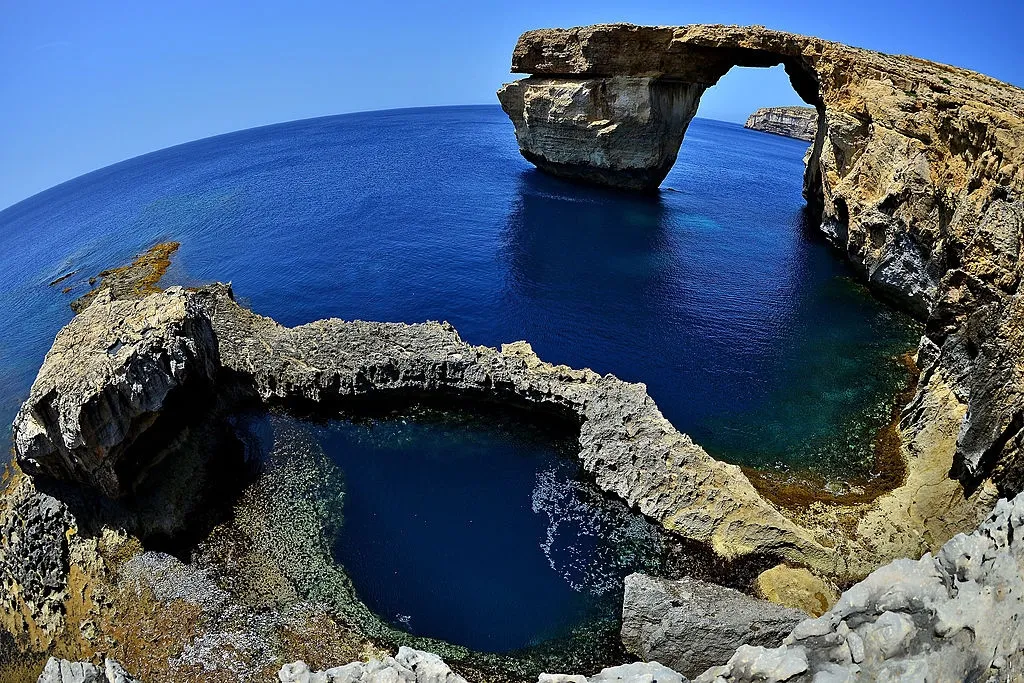
A stunning natural arch that was the setting for several films and one episode of "Game of Thrones" has collapsed into the sea after storms lashed the limestone structure.
The Azure Window, found on Malta's Gozo Island, collapsed early Wednesday (March 8) after gale force winds and a heavy rainstorm roiled the area, according to news reports.
The fierce winds and rough seas erased almost all traces of the iconic sea arch.
"Suddenly, the arch collapsed into the sea with a loud whoomph, throwing up a huge spray. By the time the spray had faded, the stack had gone too." Roger Chessell, a resident of nearby Xaghra who witnessed the collapse, told the Malta Times.
The limestone arch reaches some 328 feet (100 meters) high and has been a popular platform for cliff divers, who can jump into one of the sinkholes surrounding the arch, including on its south side, the Blue Hole, according to a report published by Geoscience Consulting in 2013.
Like all arches subject to the vagaries of erosion, this one was doomed to die eventually. A 2013 study had found that it would fail eventually, but that collapse was not imminent, the BBC reported. In a press conference, the environment minister Jose Herrera said there wasn't anything that could have been done to prevent the collapse, as studies found no man-made interventions would have protected the arch, the Malta Times reported.
Originally published on Live Science.
Get the world’s most fascinating discoveries delivered straight to your inbox.

Tia is the editor-in-chief (premium) and was formerly managing editor and senior writer for Live Science. Her work has appeared in Scientific American, Wired.com, Science News and other outlets. She holds a master's degree in bioengineering from the University of Washington, a graduate certificate in science writing from UC Santa Cruz and a bachelor's degree in mechanical engineering from the University of Texas at Austin. Tia was part of a team at the Milwaukee Journal Sentinel that published the Empty Cradles series on preterm births, which won multiple awards, including the 2012 Casey Medal for Meritorious Journalism.