













In Photos: Destruction of Iconic Monuments at Ancient City of Palmyra

Palmyra ruins

New satellite images show that further destruction has occurred at Palmyra since the ancient Syrian city was retaken by ISIS last month. The UNESCO World Heritage site northeast of Damascus reached its peak between the 1st and 3rd centuries A.D.
Satellite imagery snapped on Dec. 26, 2016, showing the Tetrapylon and Roman theater prior to the recent damage in Palmyra.
[Read the full story on the Palmyra destruction]
Significantly damaged

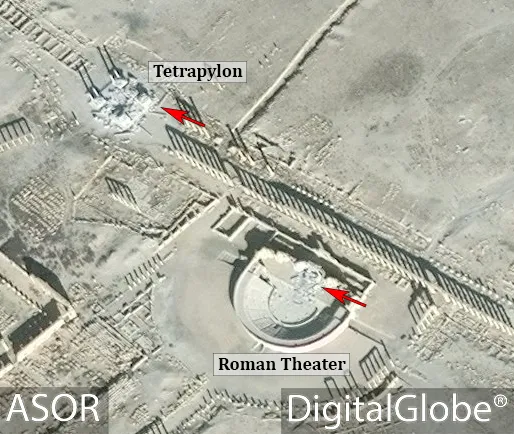
Images of the same area from January 2017 showed significant damage to two of the site's major monuments, the Tetrapylon and the Roman theater, according to the Cultural Heritage Initiatives (CHI) of the American Schools of Oriental Research (ASOR).
New war crime
UNESCO Director General Irina Bokova called the destruction "a new war crime and an immense loss for the Syrian people and for humanity."
Tetrapylon

Most of the towering columns of Palmyra's Tetrapylon, shown in the foreground here, are now demolished.
Deliberate destruction

ASOR researchers say that the monument intentionally destroyed using explosives.
Get the world’s most fascinating discoveries delivered straight to your inbox.
Theater of war

The Roman theater, where ISIS has conducted several executions, also showed signs of fresh damage.
