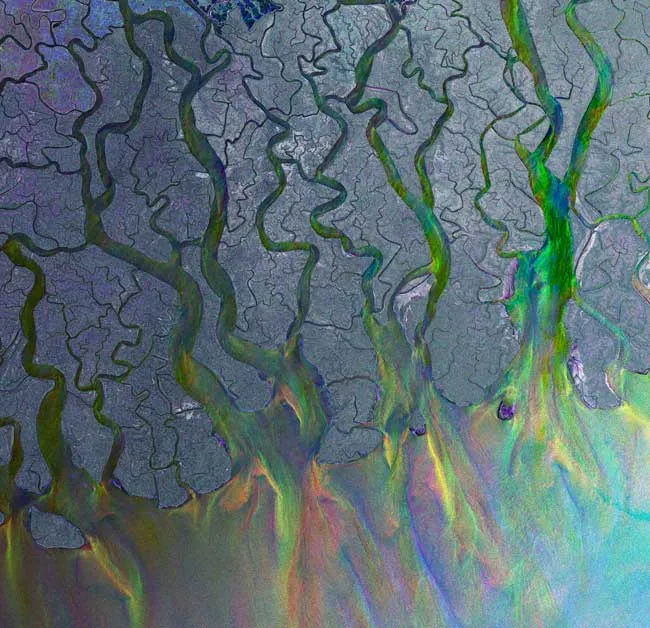
Ganges Delta: Gorgeous, Wild and Deadly
Get the world’s most fascinating discoveries delivered straight to your inbox.
You are now subscribed
Your newsletter sign-up was successful
Want to add more newsletters?
Delivered Daily
Daily Newsletter
Sign up for the latest discoveries, groundbreaking research and fascinating breakthroughs that impact you and the wider world direct to your inbox.
Once a week
Life's Little Mysteries
Feed your curiosity with an exclusive mystery every week, solved with science and delivered direct to your inbox before it's seen anywhere else.
Once a week
How It Works
Sign up to our free science & technology newsletter for your weekly fix of fascinating articles, quick quizzes, amazing images, and more
Delivered daily
Space.com Newsletter
Breaking space news, the latest updates on rocket launches, skywatching events and more!
Once a month
Watch This Space
Sign up to our monthly entertainment newsletter to keep up with all our coverage of the latest sci-fi and space movies, tv shows, games and books.
Once a week
Night Sky This Week
Discover this week's must-see night sky events, moon phases, and stunning astrophotos. Sign up for our skywatching newsletter and explore the universe with us!
Join the club
Get full access to premium articles, exclusive features and a growing list of member rewards.
Satellites have captured a snapshot of the Ganges delta, the world’s largest river delta and one of the most geographically turbulent spots in the world.
The interweaving network of streams that make up the Ganges Delta in South Asia is formed by the joining of three rivers – the Padma, Jamuna, and Meghna rivers. More than 100 million people (mostly Bangladeshi) call the delta home, relying mostly on rice, tea and other crops for subsistence. The region is also inhabited by around 1,000 endangered Bengal tigers.
Since the turn of the century, the delta has become ground zero for a host of devastating natural disasters. In 1970, the region was ravaged by the Bhola cyclone — one of the deadliest on record, with a death toll estimated at between 500,000 and 1 million people. In 1991, the Bangladesh cyclone killed an estimated 138,000 people. Just seven years later, the Ganges flooded the delta, leaving more than 30 million people homeless and wiping out rice crops and threatening the entire nation’s food supply.
The Ganges delta is also particularly vulnerable to climate change, since further melting of glaciers and snow from the Himilayan mountains can lead to more severe floods.
- The 10 Worst U.S Natural Disasters
- Video: Goldilocks and the Greenhouse
- Image Gallery: Earth As Art
Get the world’s most fascinating discoveries delivered straight to your inbox.