













Home, Sweet Home: Urban Rats Stay Put

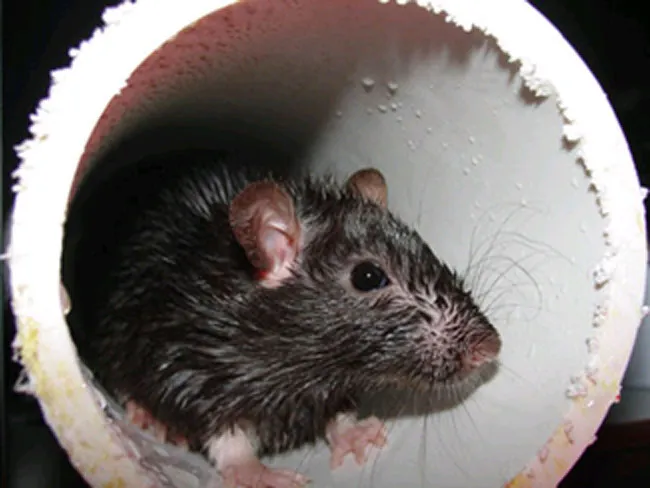
City mice like to stick close to home and form distinct communities, research now shows. Past studies on rat populations, based only on observations, have shown that urban rats generally don't move around as much as rural rats. But scientists also know that rodents can travel long distances. To get a picture of how far from home rats in Baltimore usually travel, researchers at the John Hopkins Bloomberg School of Public Health carried out genetic studies on rats in the area. The scientists captured nearly 300 Norway rats, also known as brown rats, from 11 residential areas in Baltimore. Norway rats are about 13 to 18 inches long (including their tail, which is around 6 to 8 inches), and they usually weigh about 11 ounces, although some can weigh up to 2 pounds. The scientists analyzed the rats' DNA to see how closely they were related. The most stark genetic differences were between the eastern and western rat populations — groups that are also geographically separated by a large waterway called the Jones Falls. Within the east and west areas, the rat population formed smaller communities, about the size of 11 city blocks. These communities were further divided into neighborhoods that are about 5,600 square meters — a little larger than the average alley. The results were detailed in this month's issue of the journal Molecular Ecology. The findings suggest that small-scale eradication efforts focused on specific neighborhoods may be ineffective because they may simply drive rats out of one area into another. To combat the rodents, extermination campaigns may be more productive if they are applied to a wider area.
Get the world’s most fascinating discoveries delivered straight to your inbox.
