













Voynich Manuscript: Images of the Unreadable Medieval Book

Most Mysterious Manuscript

The Voynich manuscript has eluded interpretation for a century. It was written in Central Europe in the 15th century and rediscovered by antique book dealer in 1912. Despite intense scrutiny, no one has been able to read the mysterious script.
Voynich Text
The Voynich manuscript's unintelligible writings and strange illustrations have defied every attempt at understanding their meaning.
10 Words

In February 2014, one researcher said he was able to decipher 10 words and 14 characters in the text, including the word for coriander.
Unknown Names

Stephen Bax, a professor of applied linguistics at the University of Bedfordshire in England, said he used the same approach that scholars have previously used to decipher Egyptian hieroglyphs and other texts, which involves first identifying proper names for things like plants and stars.
Reading the Stars

Beyond illustrations of plants, the manuscript also contains drawings of the constellations like Taurus — another noun Bax was able to decode.
The Voynich Manuscript

Credit: The Beinecke Rare Book and Manuscript Library.
Centaurea

Bax also found a possible word for the centaurea flower in the 600-year-old script.
Get the world’s most fascinating discoveries delivered straight to your inbox.
Swirling bodies

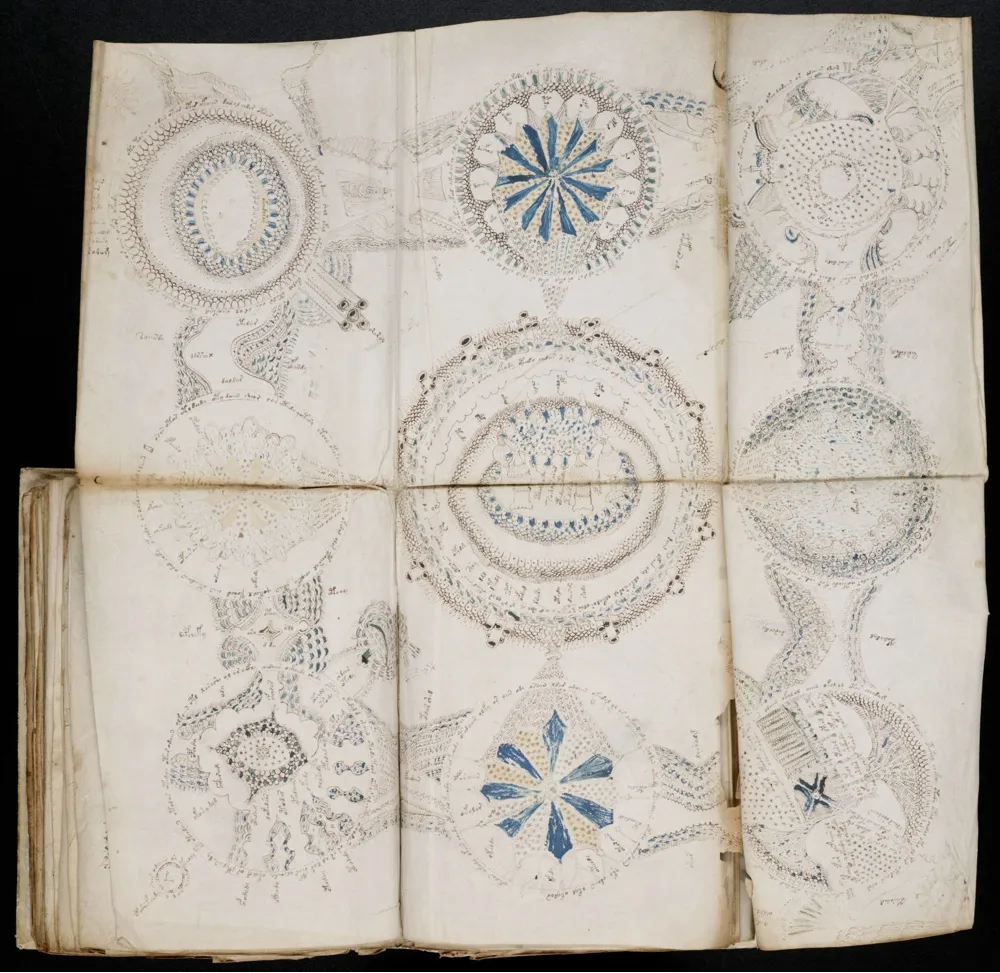
Here, a three-page foldout from the Voynich manuscript that appears to be astronomical.
