














Was Woman's Abduction Hoax Inspired by Movie?

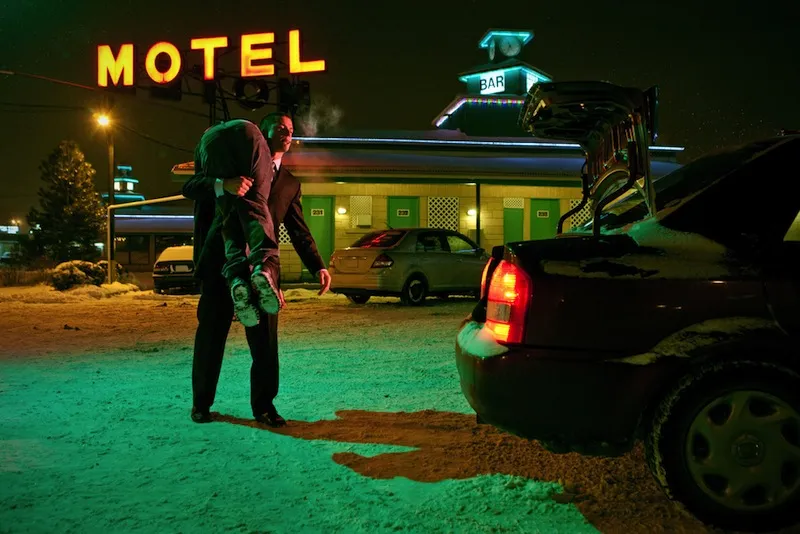
A young woman's hoaxed claim of being sexually assaulted and abducted may have been inspired by the plot of a Hollywood thriller, according to Texas police.
Delisha Lashae Thomas called 911 from the trunk of her car on Nov. 11 and begged the dispatcher for help, saying a tattooed black man in Austin, Texas, had abducted her at gunpoint. She soon lost consciousness, only to wake up in her abductor's apartment, where she said she was sexually assaulted and then forced to clean his bathroom. The next day, she said, she was forced into the trunk of her car, doused with bleach and driven around until her kidnapper left the scene. The police found her locked in the trunk of her car several hours later.
Police soon determined that Thomas had actually made the call from a McDonald's restaurant in Killeen, Texas. When confronted with evidence, including security camera videotape showing her at the fast-food restaurant during the time she was supposedly kidnapped, Thomas admitted that she made up the entire story and that none of it was true; she had even splashed bleach on herself to fool the police. She offered no explanation for her hoax. [The World's Greatest Hoaxes]
False reports
This is not the first time that Thomas has been caught in a hoax; while attending a university last year, she claimed to have taken the Law School Admission Test and gotten one of the best scores in the country. However, school officials revealed that not only had she not received an outstanding score, but that she had never even taken the test. It's not hard to understand why Thomas would lie about a remarkable academic achievement — after all, it brings congratulations, praise and possibly even lucrative job offers.
But when people lie about being the victim of a crime, it is often for attention and sympathy. In this case, Thomas may have committed an even more unusual hoax: A copycat crime. Since her arrest, several of Thomas' friends and co-workers have told police that she may have been inspired by a Hollywood movie she'd recently seen titled "The Call." The film stars Halle Berry as a 911 police dispatcher who gets an emergency call from a young woman who has been abducted and forced into the trunk of her car.
Cinema Copycat Crime?
Get the world’s most fascinating discoveries delivered straight to your inbox.
Could "The Call" have inspired Thomas? It's certainly possible; people have been known to copy or imitate scenes from films and television shows. In 1993, for example, several high school football players were injured re-enacting a scene in the film "The Program" in which athletes laid down the middle of a highway. Two years later, the action film "Money Train" inspired copycats to squirt lighter fluid into Brooklyn subway token booths and set them afire.
While Thomas may have gotten the idea for her hoax from the film, she is not the first to report a fake abduction. In fact, in recent years, several other women have called police pretending to have been abducted and locked in a car trunk.
Last year, a young woman from Delray Beach, Fla., claimed that she had been abducted on her way to school and forced into the trunk of a car. She sent two text messages to her mother from the trunk, launching a statewide manhunt. The teen apparently made up the story to hide the fact that she had skipped school to spend the day in a hotel room with a man she was dating.
In 2011, a Myrtle Beach woman called police from the trunk of her car saying that a man had approached her at a stoplight, held a knife to her throat, pulled her from her car, assaulted her and forced her into the trunk. She claimed to have escaped from the trunk after the man pulled over and left the vehicle. Police searched the area, but found no evidence of her attacker and noted many inconsistencies in her story. She was charged with filing a false report.
We may never know exactly why Thomas made up her story of being kidnapped and sexually assaulted. Though rare, such false claims do happen and are not only a serious drain on police resources, but may also discourage real victims from coming forward.
Benjamin Radford is deputy editor of "Skeptical Inquirer" science magazine and author of six books including "The Martians Have Landed! A History of Media Panics and Hoaxes." His Web site is www.BenjaminRadford.com.
Follow us @livescience, Facebook & Google+. Original article on LiveScience.
