














Understanding Flu Virus Mutations Is Key to Vaccine Progress
Every year, the influenza virus evolves, allowing the resulting strains to escape the flu-fighting antibodies our immune systems produced in response to previous vaccination or infection. So every year, scientists develop new seasonal flu vaccines to protect us from the circulating strains.
To help end this game of cat-and-mouse, researchers continue to study how the virus operates. Recent studies, funded in part by the National Institutes of Health, shed light on the inner workings of the flu — and might aid the development of more effective vaccines, as well as antiviral drugs to treat infection.
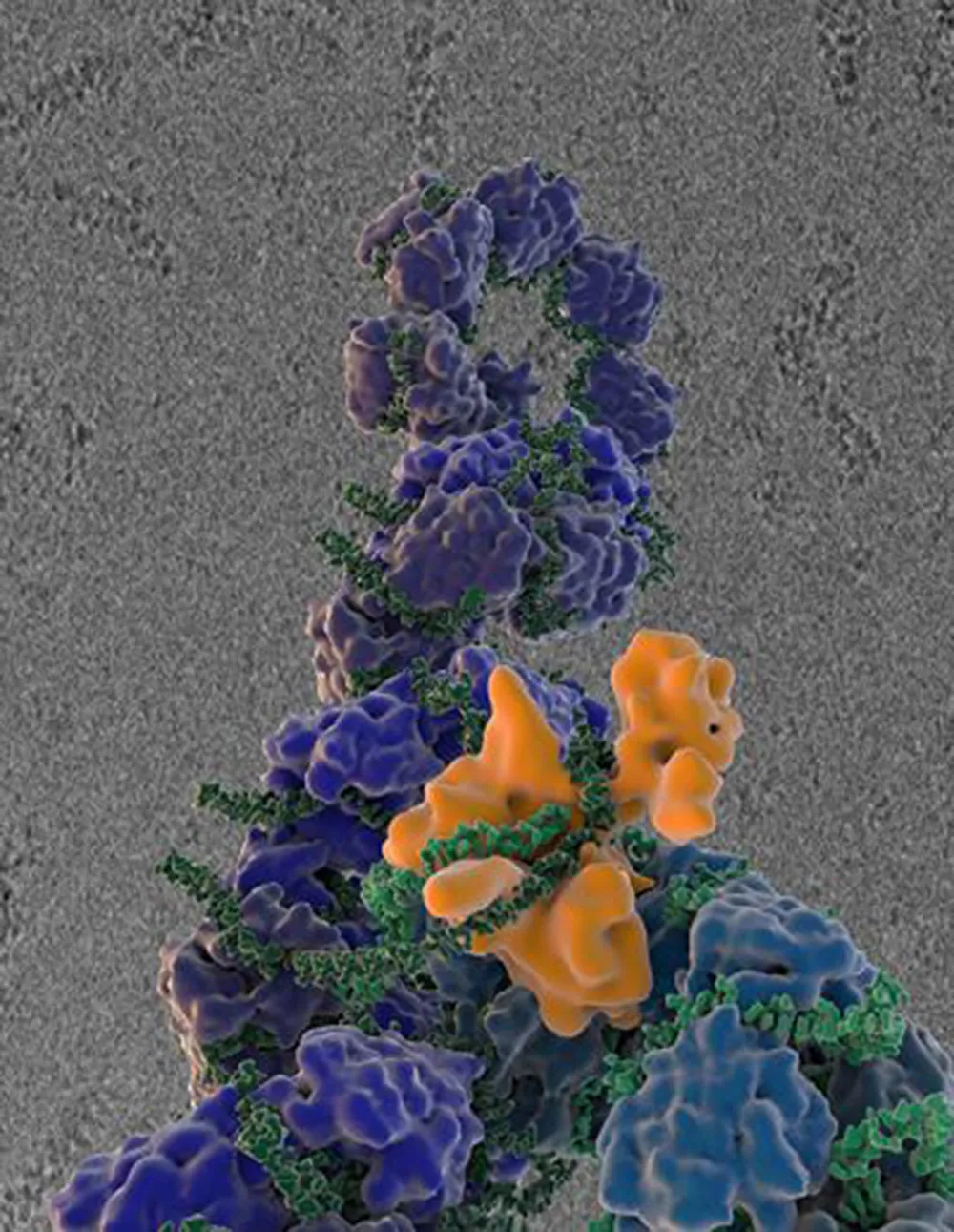
A key step in the flu's ability to infect is its ability to replicate, or copy itself. The virus does this with the help of complexes called ribonucleoproteins. For the first time, researchers at the Scripps Research Institute were able to coax the complexes to assemble themselves in the lab environment. This allowed the scientists to use an imaging technique called electron microscopy to get a close-up look at how the pieces of the viral replication machinery interact. These structural and functional insights may provide new targets for antiviral drugs.
Another study, from researchers at the Fred Hutchinson Cancer Research Center, has uncovered a surprising new flu mutation that allows the virus to infect cells in an unusual way.
Normally, a protein called hemagglutinin lets flu viruses attach to cells, and a protein called neuraminidase lets replicated viruses escape from infected cells and go on to infect others. The Seattle researchers disabled the gene that makes hemagglutinin in normal flu viruses to see if the viruses would evolve a different way to attach to cells. After many generations, they did. The scientists found a mutant flu virus with a neuraminidase that enables the virus to attach to host cells even when hemagglutinin's binding is blocked.
The researchers found the same mutation occurring naturally in strains from several recent flu outbreaks. These results indicate a possibility that flu viruses with such mutations may be able to escape antibodies that block the binding of hemagglutinin, and that future flu vaccines may need to target these mutations.
This Inside Life Science article was provided to LiveScience in cooperation with the National Institute of General Medical Sciences, part of the National Institutes of Health.
Get the world’s most fascinating discoveries delivered straight to your inbox.
Learn more:
NIH Resource on Flu and Influenza Research
Also in this series:
Exploring 4 Mysteries of the Flu Virus
What Drives Seasonal Flu Patterns?