













Nobel Peace Prize Honors Watchdog of Chemical Weapons
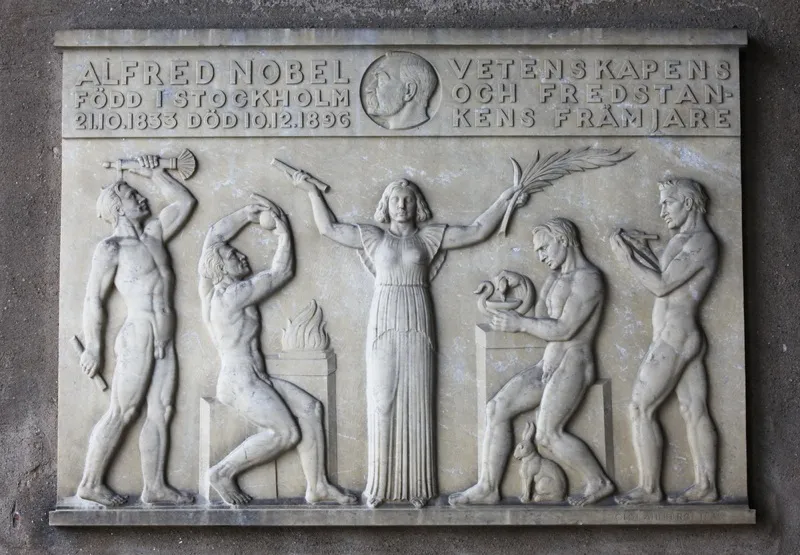
The Nobel Peace Prize will be awarded to an organization "for its extensive efforts to eliminate chemical weapons," the Nobel Committee stated today (Oct.11).
Through various means, including inspections and destruction, the Organization for the Prohibition of Chemical Weapons (OPCW) has sought to implement the Chemmical Weapons Convention prohibiting the production and storage of chemical weapons. To date, 189 states have acceded to the convention. (The Geneva Convention of 1925 banned the use of chemical weapons, but not their production or storage.)
These conventions and work completed by OPCW have made chemical weapons use "taboo under international law," according to a statement by the Nobel Prize website.
"A lot has been achieved, and we are now in a situation in which we can do away with a whole category of weapons of mass destruction for the first time if remaining states accede to the convention and that those who have acceded to it fulfill their obligations," said Thorbjørn Jagland, chairman of the Norwegian Nobel Committee, in an interview with freelance journalist Geir Helljesen.
And the awarding of the Nobel prize to OPCW also serves as a global message.
"We want to give a message to those outside the convention to join the convention, and those who are inside who haven't fulfilled their obligations more speedily," Jagland said, "and also to give a message to the world how important it is to have such global conventions and global institutions, because we see now in Syria this is actually the basis for the talks that have been started between Russia and the United States to solve the crisis in Syria."
In fact, the OPCW, which is funded by its member states, is overseeing the destruction of chemical weapons in Syria; acknowledging their possession of such weapons, Syria is due to become a member state on Monday (Oct. 14), according to the Associated Press.
Get the world’s most fascinating discoveries delivered straight to your inbox.
The Nobel Peace Prize award of $1.25 million (8 million Swedish krona) will go to the OPCW.
Follow Jeanna Bryner on Twitter and Google+. Follow us @livescience, Facebook & Google+.
Jeanna Bryner is managing editor of Scientific American. Previously she was editor in chief of Live Science and, prior to that, an editor at Scholastic's Science World magazine. Bryner has an English degree from Salisbury University, a master's degree in biogeochemistry and environmental sciences from the University of Maryland and a graduate science journalism degree from New York University. She has worked as a biologist in Florida, where she monitored wetlands and did field surveys for endangered species, including the gorgeous Florida Scrub Jay. She also received an ocean sciences journalism fellowship from the Woods Hole Oceanographic Institution. She is a firm believer that science is for everyone and that just about everything can be viewed through the lens of science.