














Will two worms grow from a worm cut in half?
It depends on the type of worm you're talking about, but most earthworms can't regenerate so easily.

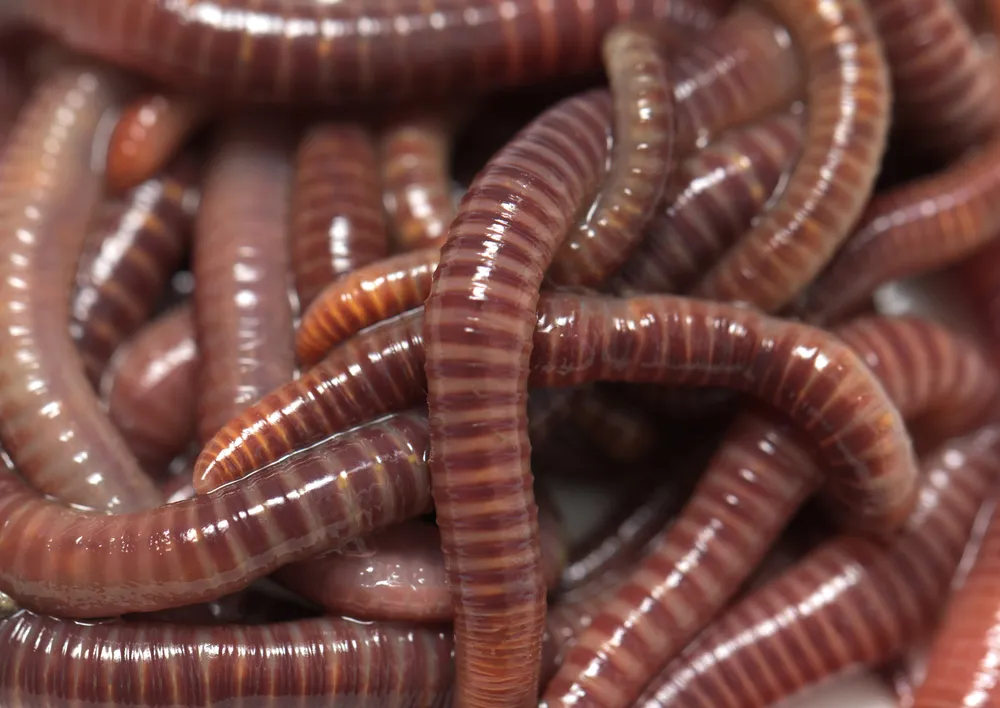
You may have been told as a child that an earthworm will regenerate into two new worms if it's cut in half crosswise. But if you've ever experimented with the tube-like animals, you've probably been disappointed.
So, can earthworms be cut in half and turned into two?
The answer, it turns out, is complicated, and depends on the species in question.
Though it may not seem like it, earthworms (a term that encompasses 1,800 species in the genus Lumbricus) have a distinctive head and tail. The head of a worm is always located on the end closest to the swollen band, called the clitellum, that encircles the animal, Washington Post reported.
If an earthworm is split in two, it will not become two new worms. The head of the worm may survive and regenerate its tail if the animal is cut behind the clitellum, according to The Washington Post. But the original tail of the worm will not be able to grow a new head (or the rest of its vital organs), and will instead die.
Related: Decapitated worms regrow brains
However, evolution has led to a type of "worm" that puts the earthworm's regenerative ability to shame: the planarium flatworm (phylum Platyhelminthes). This tiny invertebrate, which belongs to a separate phylum from earthworms, is able to reform its entire body from slivers just a tiny sliver of the animal's original body size, according to a 2014 study in the journal eLife.
Get the world’s most fascinating discoveries delivered straight to your inbox.
And when a planarian regrows its head after decapitation, the creature remarkably keeps all of its old memories, according to research published in the July 2013 issue of the Journal of Experimental Biology. In that experiment, they found that decapitated creatures still wriggled their way through a maze to food, even though they had been trained to find the food when they still had their heads.
This effect occurred even if there was no brain tissue retained in the decapitated creature.
Originally published on Live Science.
