













Research Group Releases List of Unhealthy Household Cleaning Products

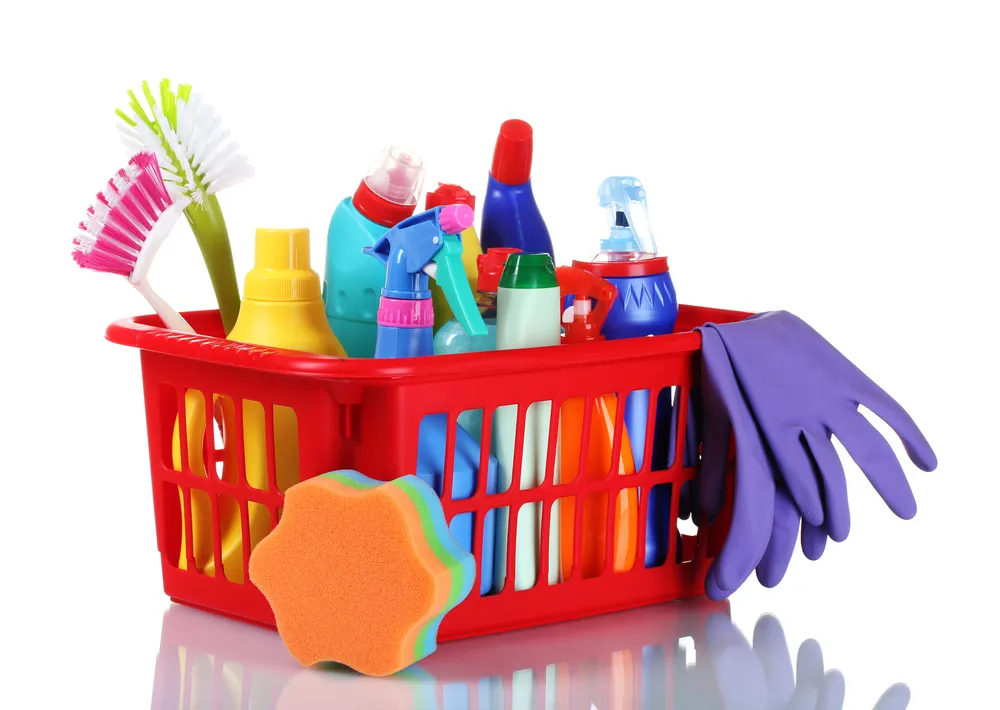
Household cleaners, including some labeled with claims such as "natural," contain chemicals that are hazardous to human health, according to a new report from the Environmental Working Group.
Research conducted by the EWG showed that household cleaning products available in the U.S. may contain compounds banned in other countries that are known to cause blindness, cancer, asthma and other serious conditions, according to a statement from the non-profit organization.
These cleaners may present severe risks to children who may ingest or spill them or breathe their fumes, according to the EWG.
Other cleaning products on the list released today — dubbed the "Cleaners Hall of Shame" — were included because they are "greenwashed," meaning that they are not as environmentally benign as they claim to be. And others neglect to list all of their ingredients, instead using vague terms such as “fragrance," the EWG said.
"Cleaning your home can come at a high price — cancer-causing chemicals in the air, an asthma attack from fumes or serious skin burns from an accidental spill,” said Jane Houlihan, EWG senior vice president for research and co-author of the list.
Among the worst offenders, according to the EWG:
- Mop & Glo Multi-Surface Floor Cleaner: The product contains methoxydiglycol (DEGME), a chemical "suspected of damaging the unborn child," according to the United Nations Economic Commission for Europe. DEGME levels in this product are up to 15 times higher than allowed in the European Union.
- Tarn-X tarnish remover: This product contains up to 7 percent thiourea, a chemical categorized as a carcinogen by the state of California. The National Toxicology Program, an interagency federal group, says that thiourea is "reasonably anticipated to be a human carcinogen."
- Simple Green Concentrated All-Purpose Cleaner: Advertising claims for this product say it's “non-toxic,” but it contains 2-butoxyethanol, a solvent absorbed through the skin that irritates eyes and may damage red blood cells. Moreover, the concentrated product is sold in a ready-to-use spray bottle despite instructions to dilute, even for heavy cleaning.
- Target’s Up & Up and Walmart’s Great Value brands, whose product labels offer little or no ingredient information.
Other products cited for hidden hazards:
Get the world’s most fascinating discoveries delivered straight to your inbox.
- Conventional oven cleaners with sodium or potassium hydroxide that can burn skin, lungs and eyes.
- Spray cleaners with quaternary ammonium compounds or ethanolamine, chemicals that can trigger asthma attacks and can cause new cases of the disease in people who are asthma-free.
The complete list includes 32 products, said Leeann Brown, press secretary for the EWG.
The group has previously released other lists aimed at helping to inform consumers about the health impacts of consumer products. For example, the group annually releases a list of fruit and vegetables, called "The Dirty Dozen," that consumers are recommended to buy organic, because of relatively high concentrations of certain pesticides, and "The Clean 15" which lists the conventionally-grown (not organic) fruits and vegetables that are lowest in these chemicals.
Pass it on: The Environmental Working Group released a list today of cleaning products that it says pose a threat to human health.
Follow MyHealthNewsDaily on Twitter @MyHealth_MHND. Find us on Facebook.
