













How Can Common Shoulder Problems Be Treated?
[This is the second of two columns on shoulder problems. Read the first column, on common types of shoulder injuries.]
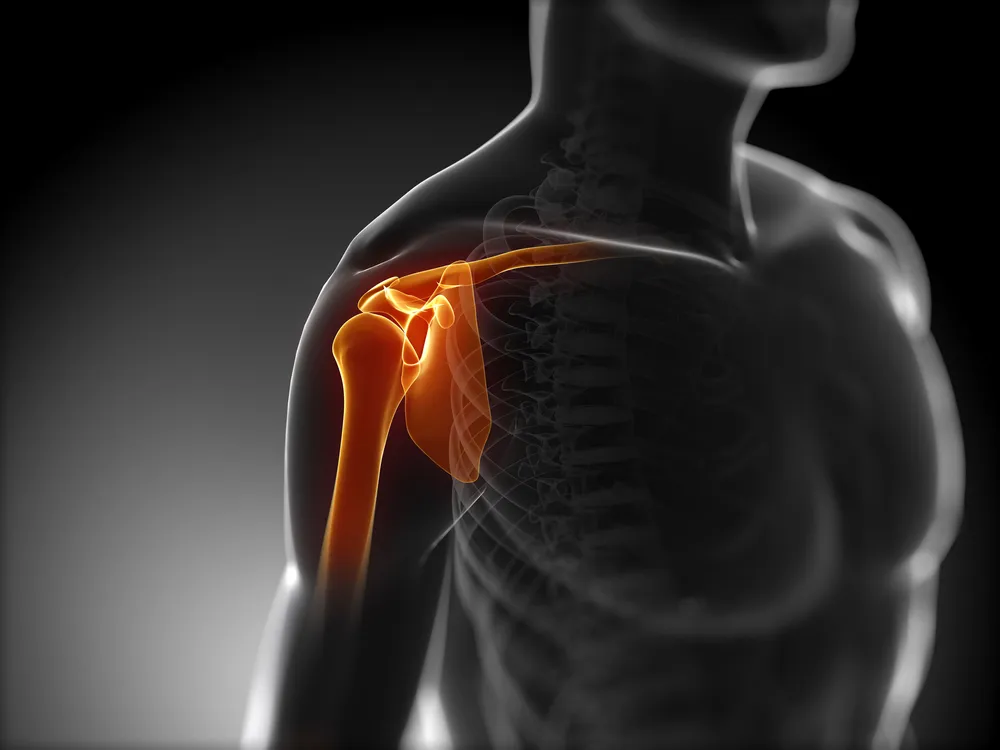
The shoulder is made up of three bones: the collarbone, the shoulder blade and the upper arm bone. The shoulder is the body's most movable joint. It is also unstable because the ball of the upper arm is larger than the shoulder socket that holds it. The unstable shoulder is held in place by soft tissue: muscles, tendons and ligaments.
Common shoulder problems include dislocation, separation, torn rotator-cuff, frozen shoulder, fracture, arthritis, tendinitis and bursitis. The rotator cuff is defined as the set of muscles and tendons that secures the arm to the shoulder joint and permits the arm to rotate.
Doctors diagnose shoulder problems by studying your medical history, giving you a physical examination and performing tests such as x-rays, ultrasound and magnetic resonance imaging (MRI).
Shoulder problems are most often first treated with RICE (Rest, Ice, Compression, and Elevation):
- Rest the shoulder for two days.
- Ice the injured area for twenty minutes, four to eight times per day.
- Compress the painful area to reduce swelling.
- Elevate the injured area with a pillow to keep it above the level of the heart.
Other treatments:
- Slings are used often to keep an injured shoulder in place.
- After rest, stretching and exercise can improve range of motion, strengthen muscles, and prevent injury.
- Nonsteroidal anti-inflammatory drugs (NSAIDs) such as aspirin, ibuprofen and naproxen are used to reduce pain and swelling.
- Ultrasound is used to warm deep tissues and improve blood flow.
- An injection of a corticosteroid drug into the shoulder is often recommended if the injury does not improve in the first few weeks.
- Transcutaneous electrical nerve stimulation (TENS) with a small battery-operated unit may be used to reduce pain by blocking nerve impulses.
- When tears are severe, surgery may be required. Seniors often can be treated without surgery for a complete rotator-cuff tear.
Here are some easy exercises to strengthen shoulder muscles and prevent injuries:
Get the world’s most fascinating discoveries delivered straight to your inbox.
- Attach elastic tubing to a doorknob. Pull the elastic tubing slowly toward your body. Hold for a count of five. Repeat five times with each arm. Perform twice a day.
- Lean forward and place your hands on a wall with your feet shoulder-width apart. Slowly perform a push-up. Hold for a count of five. Repeat five times. Perform twice a day.
- Sit upright in a chair with armrests. With your feet touching the floor, use your arms to rise slowly. Hold for a count of five. Repeat five times. Perform twice a day.
An aerobic exercise program will help improve the blood flow to a tendon or bursa. This helps reduce soreness. Smokers should quit smoking so more oxygen reaches the injured tendon. This will help the injury heal faster.
If you would like to read more columns, you can order a copy of "How to be a Healthy Geezer" at www.healthygeezer.com.
All rights reserved © 2012 by Fred Cicetti
More from the Healthy Geezer: