













Ring of Danger: Your Belly Fat
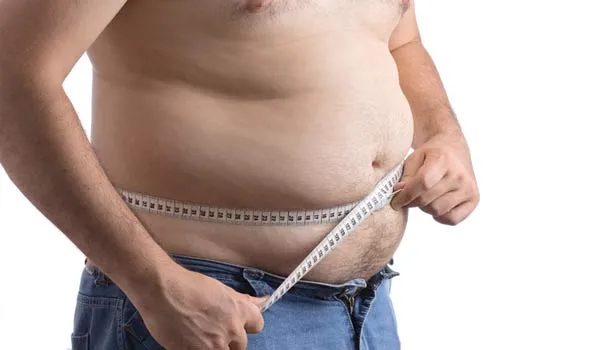
Look at any of the fashion magazines and you will see women and men with six-pack abs. In real life, keg-size stomachs are much more common. And too much belly fat can kill.
The fat that develops around your waistline also sometimes called a muffin top, because it flows out over too-narrow waistbands, or a spare tire is not only unattractive but can lead to serious diseases.
The presence of too much belly fat has been associated with increased risk of dementia, heart disease, Type 2 diabetes and cancer, said Deborah Clegg, a clinical nutritionist and professor at the University of Texas Southwestern Medical Center.
Clegg has studied fat growth patterns and found that men are more likely than women to develop belly fat, while women deposit more fat in their hips and thighs.
A woman who is curvy with thick hips and thighs may be healthy, she said. It's the belly fat that is potentially dangerous.
"Fat in the belly is in and around the organs. All that fat is inside the abdominal wall. It is very bad fat," she said.
In the evolutionary history of humans, belly fat was not always so damaging, Clegg said. The ancestors of modern humans, who hunted regularly, needed belly fat to store up the energy to chase animals.
Get the world’s most fascinating discoveries delivered straight to your inbox.
"Belly fat is the easiest to get rid of. In the caveman days, the men had to run and expend energy quickly, so fat was deposited in those areas. Women never had to hunt, so fat wasn't deposited in their bellies," Clegg told MyHealthNewsDaily.
"Here comes 2010: We never have famine and don't have to chase bears for food. We aren't having those bursts of energy to get rid of that fat."
Because of the sedentary lives many lead, fat collects. Even a little excess weight around the midsection hinders the function of blood vessels, increasing the risk of high blood pressure and other diseases, according to a report published in the Aug. 17 Journal of the American College of Cardiology.
In general, men have a higher prevalence of diseases associated with a larger belly than women do. But post-menopausal women have a high rate of disease.
"After menopause, our bodies no longer deposit fat in the hips and thighs; it goes to the belly, because the belly is the only place where the body can create fat cells," Clegg said.
Clegg said that in post-menopausal women, belly fat behaves as a "third ovary" because it creates estrogen.
There is no way to tell when belly fat reaches the point of being dangerous, Clegg said. Even people who appear to be skinny can have large amounts of fat in their bellies.
"Some people of Indian descent, from India, look very lean, but when you do a CT scan you see they have a lot of belly fat. Belly fat is not something the average Joe Consumer can assess," she said.
Clegg also warned that simply exercising the abdomen does not work. She advises people to maintain a healthy diet and exercise regime.
"You lose weight by increasing energy expenditure that is the only true way to decrease body weight. We can't selectively increase energy expenditure only in one place," she said.