













Can Snakes See Well?

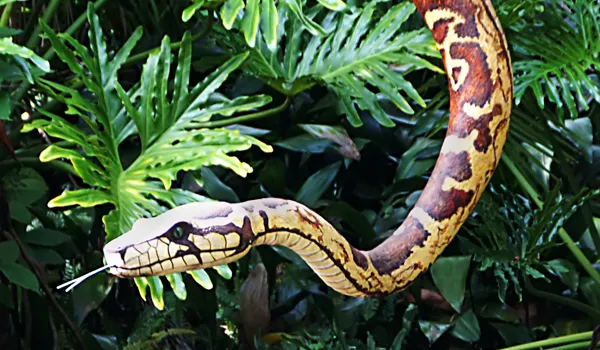
With the exception of a few species that have adapted to daytime hunting, most snakes do not see well. Generally they can see shapes but not details.
This poor eyesight probably owes to their evolutionary history as burrowers, living in the dark where eyes weren't much use.
Snakes called pit vipers can see well at night by an amazing trick. Their pits (one on each side of the head) sense heat (infrared light) like night vision goggles. These pits, not eyes, actually are thought to render images of prey in the snakes' brains.
Interestingly, Cobras' senses are sharp enough to aim for the eyes when spitting venom. They know, apparently, that the venom will blind a human or other foe.
Follow Life's Little Mysteries on Twitter @ llmysteries. We're also on Facebook & Google+.
Get the world’s most fascinating discoveries delivered straight to your inbox.

Robert is an independent health and science journalist and writer based in Phoenix, Arizona. He is a former editor-in-chief of Live Science with over 20 years of experience as a reporter and editor. He has worked on websites such as Space.com and Tom's Guide, and is a contributor on Medium, covering how we age and how to optimize the mind and body through time. He has a journalism degree from Humboldt State University in California.