














Glowing Clouds Created by NASA Rocket Launch

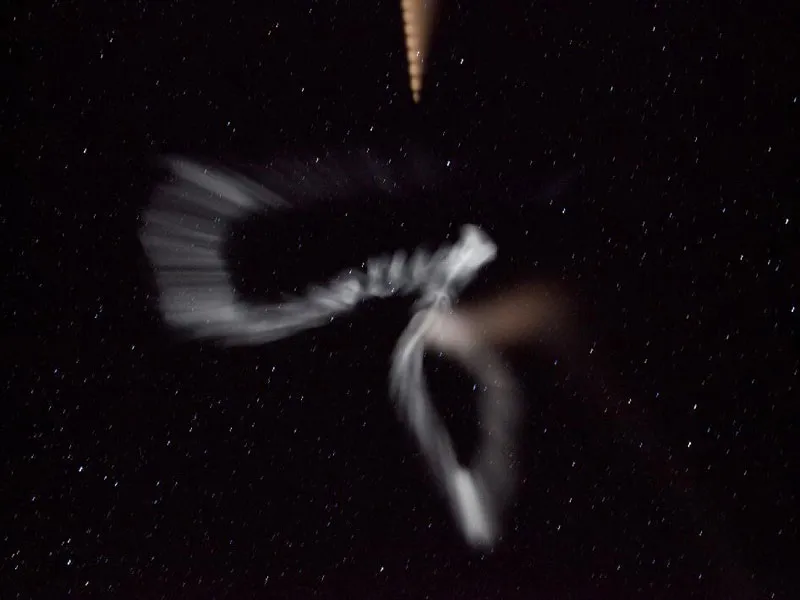
NASA successfully launched five sounding rockets into the Earth's atmosphere early this morning as part of a study of the upper level jet stream, which controls the flow of many weather systems across North America.
The first Anomalous Transport Rocket Experiment (ATREX) rocket launched at 4:58 a.m. EDT and each subsequent rocket launched 80 seconds apart.
Each of the rockets released a chemical tracer that created milky, white clouds at the edge of space, as seen in a new NASA photo.
People reported seeing the launch and clouds from as far south as Wilmington, N.C., as far west to Charlestown, W. Va., and as far north to Buffalo, N.Y., according to a NASA statement.
The aim of the $4 million mission is to help scientists better understand the jet stream at altitudes between 60 to 65 (97 to 105 kilometers) miles above the surface of the Earth. The jet stream here can produced ultra-fast winds that can reach speeds of up to 300 mph (483 kph). The tracers released by the rockets will help track those winds.
The launches followed repeated delays due to bad weather, a wayward boat in the launch range and a technical glitch, which forced the mission to postpone its initial March 14 liftoff target.
If you snapped an amazing photo of the ATREX glowing clouds, or any other skywatching target, and would like to share it for a possible story or image gallery, please contact the managing editor of OurAmazingPlanet's sister site SPACE.com, Tariq Malik at [email protected].
Get the world’s most fascinating discoveries delivered straight to your inbox.
