














African 'Great Lake,' Home to Unique Species, Declared Protected

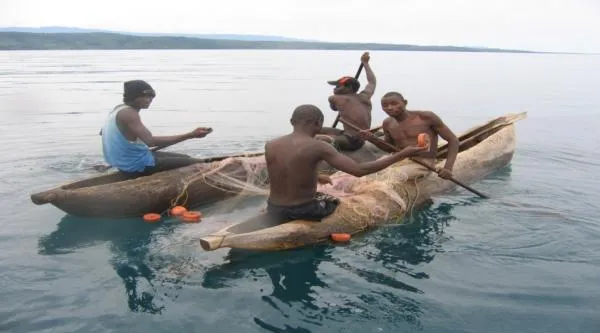
One of Africa's largest and deepest lakes, home to thousands of unique species, has been declared a protected area by the government of Mozambique.
Located in east Africa, Lake Niassa's tropical waters and shores are home to an estimated 1,000 species of cichlids , a family of brightly colored fish, with 95 percent of the species found nowhere else.
The region is also home to significant and diverse bird populations, mammals and reptiles.
"Globally, Lake Niassa is exceptional. Ninety-nine percent of the freshwater fish species that inhabit its waters only occur within this lake," said Michele Thieme, a conservation biologist with conservation group WWF, in a statement.
The massive lake covers 5,265 square miles (13,637 square kilometers) and is almost 2,300 feet (700 meters) deep.
"Scientists estimate that up to 1,000 freshwater fish species will eventually be described; a total that would equal more than the number of fish species found in all of the United States and Canada, Thieme said.
Local communities were instrumental in achieving this protection by making several concessions in order to protect their main source of food and income by agreeing to the closure of all fishing rivers during the annual spawning runs for lake salmon and other species, and the total protection of tilapia spawning beds during breeding season, the WWF said.
Get the world’s most fascinating discoveries delivered straight to your inbox.
The new reserve is the first freshwater lake under protection in Mozambique. In addition to Mozambique, the lake is bordered by Malawi and Tanzania, and is also known as Lake Malawi.
