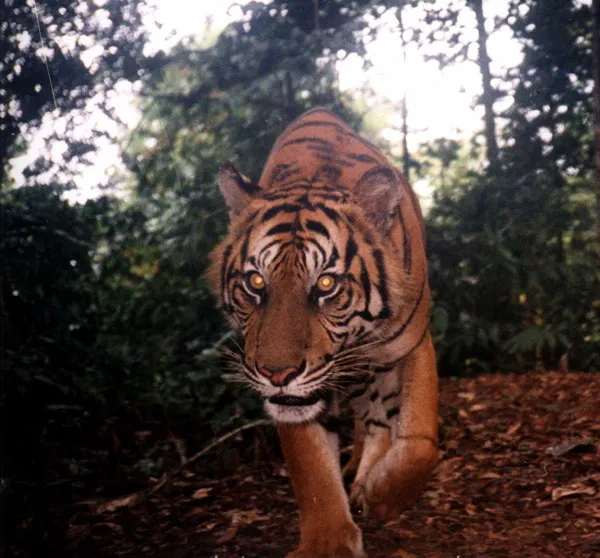
With strategically placed camera traps, scientists are using a collection of photographs taken from remote locations to determine if certain wildlife populations are rising or falling.
A new analysis of 5,450 images of tigers, elephants and other animals in an Indonesian national park suggests a net biodiversity decline of 36 percent over the past eight years.
Called the Wildlife Picture Index (WPI), the images from the motion-triggered camera traps, form virtual photo albums. The albums, which can contain thousands of photos of dozens of species, get run through a statistical analysis to determine the diversity and distribution of a broad range of wildlife .
"The Wildlife Picture Index is an effective tool in monitoring trends in wildlife diversity that previously could only be roughly estimated," said Tim O'Brien of the Wildlife Conservation Society and leader of a study that looked at the WPI's effectiveness. "This new methodology will help conservationists determine where to focus their efforts to help stem the tide of biodiversity loss over broad landscapes."
One of the 5,000 plus camera trap shots used to develop the Wildlife Picture Index.
(Image credit: Wildlife Conservation Society)
O'Brien's team used the WPI to track changes in wildlife diversity over an eight-year period in Bukit Barisan Selatan National Park in southwest Sumatra, Indonesia. The 1,377 square-mile (2216.066 sq km) park contains the last remaining tracts of protected lowland forest in Sumatra important habitat for large mammals, including Sumatran tigers, rhinoceros and Asian elephants. It is also threatened due to poaching, illegal logging and agriculture.
The results revealed that wildlife loss outpaced the rate of deforestation, and that large, commercially valuable wildlife such as Sumatran tigers, rhinos and elephants declined faster than small primates and deer, which are only hunted as crop raiders or for subsistence.
Researchers involved hope that this new approach will drastically change how these cameras are used in the future, especially in regards to conservation.
Sign up for the Live Science daily newsletter now
Get the world’s most fascinating discoveries delivered straight to your inbox.
Elephants captured by the Wildlife Picture Index.
(Image credit: Wildlife Conservation Society)
"The Wildlife Picture Index will allow conservationists to accurately measure biodiversity in areas that previously have been either too expensive, or logistically prohibitive," said John Robinson, WCS executive vice president for conservation and science. "We believe that this new methodology will be able to fill critical gaps in knowledge of wildlife diversity while providing much-needed baseline data to assess success or failure in places where we work."
The new study is published in the August edition of the journal Animal Conservation.
For the science geek in everyone, Live Science offers a fascinating window into the natural and technological world, delivering comprehensive and compelling news and analysis on everything from dinosaur discoveries, archaeological finds and amazing animals to health, innovation and wearable technology. We aim to empower and inspire our readers with the tools needed to understand the world and appreciate its everyday awe.