














Unique Calls Reveal New Owl Species

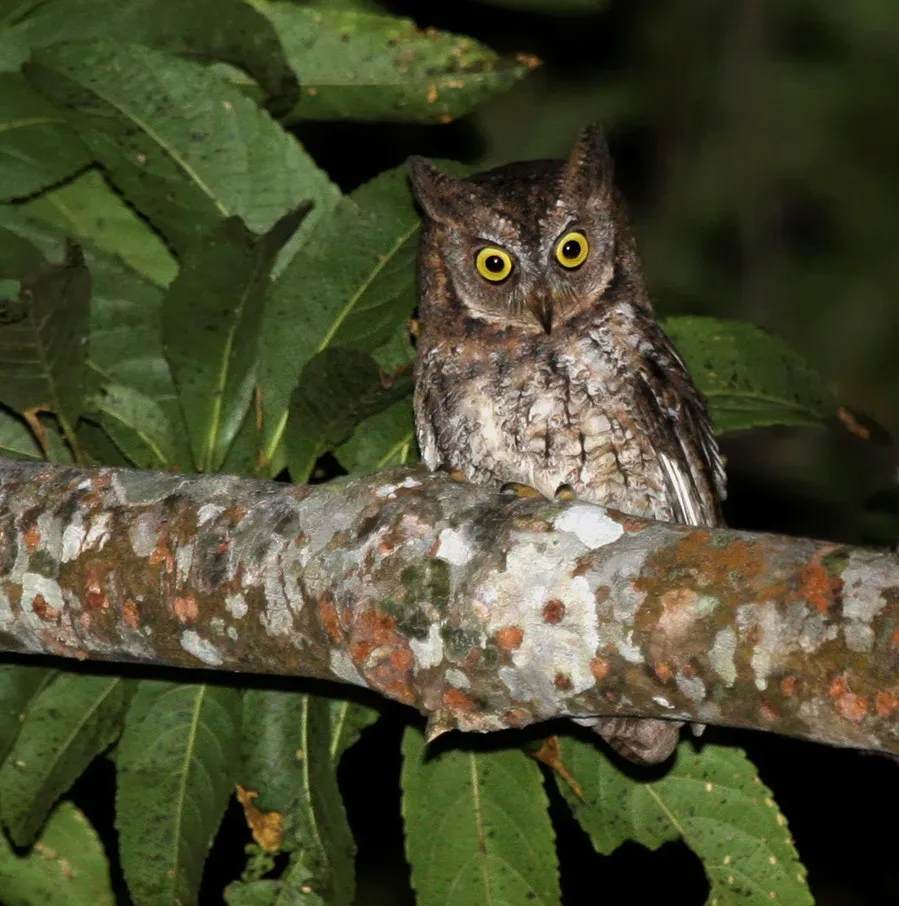
A new species of owl has been found on an Indonesian island, identified by its unique birdsong. It had escaped scientific detection for so long partially because it looks very similar to a related species.
While on a field expedition in 2003, two members of a research team on opposite ends of the Indonesian island of Lombok independently realized that the owl's calls were unique, according to a PLOS ONE study published today (Feb. 13).
That's quite a coincidence, especially considering that ornithologists didn't think Lombok was home to a unique species of owl despite years of study in the region, said George Sangster, study co-author and a researcher with the Swedish Museum of Natural History.
The new species has been dubbed the Rinjani scops owl, with the scientific name Otus jolandae. It is locally common in the foothills of Mount Rinjani, a large volcano on Lombok, living at altitudes up to 4,430 feet (1,350 meters), according to the study.
"I did not expect to find a new species, and certainly not one that is this common," Sangster told OurAmazingPlanet. "It is a wake-up call for ornithologists: there is still much to learn, and new species can reveal themselves even if you are not looking for them, and in places where no one expected to find something new."
To verify that the species was unique, researchers played this new birdsong to a group of Moluccan scops owls, a related and more widespread species. They didn't respond to the calls. In the area where the unfamiliar songs were heard, however, local Lombok owls responded by whistling back and approaching the speaker the songs were played from, according to the study. A closer comparison of the new bird and the related species revealed subtle body differences — Rinjani scops owls have slightly different coloration and are slightly smaller, the study noted. DNA analysis confirmed it was a new species, Sangster said.
Owls are nocturnal and they use songs to communicate and identify one another. When owls' songs are significantly different, it's a good sign that they may be a different species, Sangster said.
Get the world’s most fascinating discoveries delivered straight to your inbox.
Based on field work, studies of museum specimens and previous research, the scientists think this owl is likely unique to Lombok. Residents of nearby islands were unfamiliar with recordings of the owl, the only exception being one man who ended up being an immigrant from Lombok, the study found.
The owls are known to locals as "burung pok," which is "an onomatopoeic name reflecting the song note of the bird, which may be transcribed as 'pok' or 'poook,'" the authors wrote in the study. [Listen to the owl's call.]
While there are more than 250 known species of owls worldwide, there are undoubtedly many species yet to be discovered, according to the study.
Reach Douglas Main at [email protected]. Follow him on Twitter @Douglas_Main. Follow OurAmazingPlanet on Twitter @OAPlanet. We're also on Facebook and Google+.
