













Why 3-Year-Olds Make Good Helpers

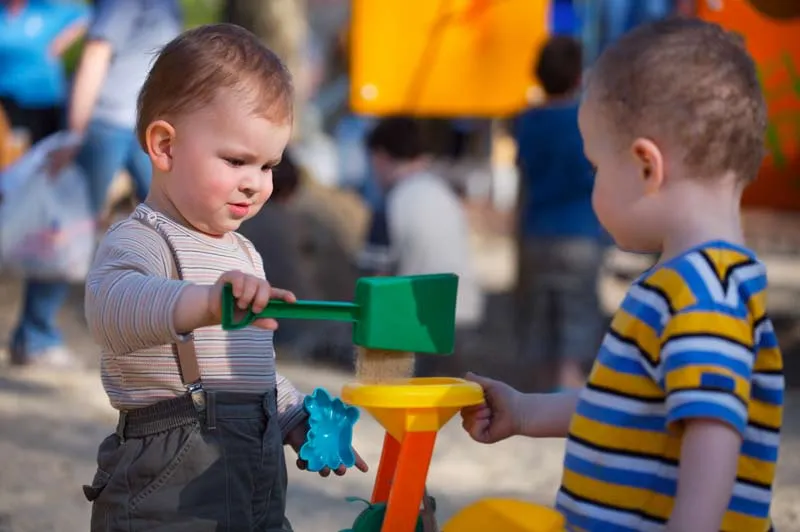
Kids start to understand from an early age what it means to be a good helper. If an adult announces that she wants a drink of water and motions for an empty glass on the kitchen table, a typical toddler will pass it over obligingly. But if that glass is cracked, most kids as young as 3 will take it upon themselves to find a more useful cup instead, new research suggests.
"It appears very young children can recognize that helping someone can sometimes mean paying attention to their ultimate goal rather than their specific request," researcher Kristina R. Olson of Yale University said in a statement. "This work illustrates that even within the first few years of life, children have a remarkably sophisticated understanding of helping."
Olson and her colleagues brought a group of 3-year-olds into a Yale lab and had them get familiar with four pairs of functional and dysfunctional items: a real cellphone and a toy cellphone; a normal plastic cup and a cup with a hole in the bottom; a real hammer and a squishy, hammer-shaped stress toy; and a working marker and a dried-up marker.
The kids then were told they were going to help an adult get ready for a game. In one trial, the adult would request one of the objects for a practical purpose. For instance, she would ask, "Could you give me that cup so I can pour some water?" and in half of the trials she would point to the cup with the hole.
The kids seemed to understand when the adult didn't know best. If she pointed to the busted item or the toy, the kids ignored her specific request and instead handed over the functional version of the object 68 percent of the time. (Meanwhile, if the adult motioned for the functional object, the kids brought it to her 97 percent of the time.)
And it's not just that kids have a natural preference for normal or functional things, the researchers say. The toddlers tended to give the adult the dysfunctional object she asked for only when it could be used to achieve an alternative goal.
For example, the children would comply with a request for a broken object or a plaything if the adult motioned to the cracked cup and asked, "Could you give me that cup so I can cut a circle in this Play-Doh?" or pointed to the toy phone and asked, "Could you give me that phone so I can use it to hold down these papers?" This suggests that kids are judicious in giving help, the researchers said.
Get the world’s most fascinating discoveries delivered straight to your inbox.
Their study was detailed online this month in the journal Developmental Psychology.
Follow LiveScience on Twitter @livescience. We're also on Facebook & Google+.
