














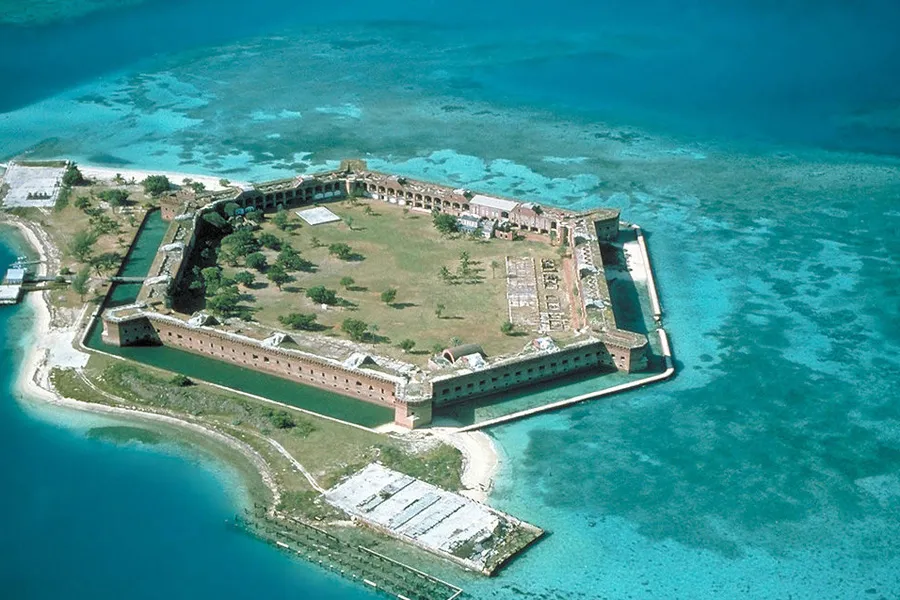
Arrr, sail west from the Florida Keys to the Tortugas, me hardies, and ye will find the finest fishing in all the seven seas, says I. But beware, only a scurvy pirate would dare fish the forbidden waters of the Tortugas Ecological Reserve.
The Tortugas islands used to be a sanctuary for the pirates of the Caribbean. Now, the waters around the islands are a 151-square nautical mile sanctuary for fish, where commercial and recreational anglers are forbidden. The National Oceanic and Atmospheric Administration’s research found that the Tortugas Ecological Reserve hasn’t cost fishers any gold. Indeed, increased fish numbers around the reserve have filled anglers treasure chests with more fishy booty.
“This research shows that marine reserves and economically viable fishing industries can coexist,” said Sean Morton, Florida Keys National Marine Sanctuary superintendent, in a press release. “The health of our economy is tied to the health of our oceans. They are not mutually exclusive.”
Since the reserve was designated in 2001, regional commercial fishery’s harvests have increased from an estimated value of $40 million in 2001 to $56 million in 2011. What’s more, since the reserve helps keep fish numbers high in the Florida Keys, it protects approximately 33,000 American jobs that depend on marine tourism and recreation in the Keys.
Humans aren’t the only winners in the reserve.
World’s Best Marine Reserve: Cabo Pulmo
Annual spawnings of mutton snapper (Lutjanus analis) were thought to have been wiped out in the area. Now, the breeding events have returned in the reserve.
Get the world’s most fascinating discoveries delivered straight to your inbox.
Overfished species, such as black grouper (Mycteroperca bonaci) , red grouper (Epinephelus morio) and yellowtail (Ocyurus chrysurus), have also increased in population numbers and physical size.
This story was provided by Discovery News.