













Morning Sickness in 2nd Trimester Ups Pregnancy Risks

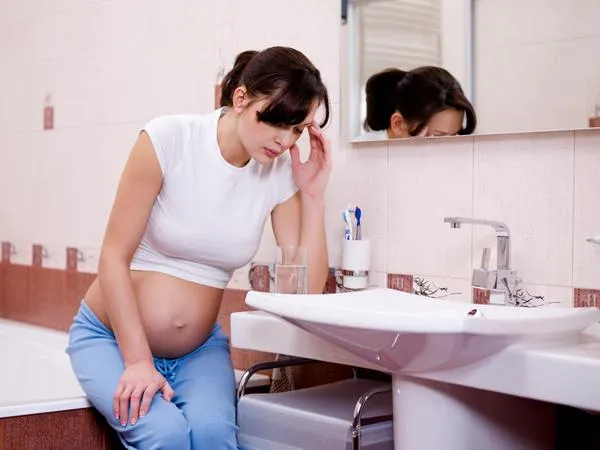
Women with severe morning sickness are at an increased risk for pregnancy complications, especially if the problem occurs during the second trimester, a new study from Sweden suggests.
In the study, mothers-to-be who were hospitalized for severe morning sickness, called hyperemesis gravidarum, during their second trimester were twice as likely to developpreeclampsia, and 1.4 times more likely to give birth to a baby that was small for his or her gestational age, compared with women who didn't suffer from severe morning sickness. The second trimester was defined as being between weeks 12 and 21 of pregnancy.
Women hospitalized for hyperemesis gravidarum during the second trimester were also about three times more likely to experience placental abruption, which occurs when the placenta separates from the wall of the uterus, compared with women without hyperemesis gravidarum.
Morning sickness severe enough to require hospitalization is very rare. During the study, which included more than 1 million women, just 1.1 percent of women were hospitalized because of the condition.
Hyperemesis gravidarum made international headlines last month when Kate Middleton, the duchess of Cambridge, spent four days in the hospital as a result of the condition. Last week, it was reported that Middleton is receiving hypnotherapy to treat the condition.
Severe morning sickness can cause malnutrition and dehydration in the woman, and has previously been linked to preterm birth. [See 3 Health Risks Linked to Severe Morning Sickness.]
The study findings suggest that hyperemesis gravidarum during the second trimester demands "an increased alertness and supervision during the pregnancy for development of any adverse outcomes," said study researcher Marie Bolin, of Uppsala University's Department of Women's and Children's Health.
Get the world’s most fascinating discoveries delivered straight to your inbox.
While most women experience some nausea and vomiting during early pregnancy, these typically subside after 10 to 16 weeks.
Severe morning sickness is thought to be caused by high levels of the hormone human chorionic gonadotropin (hCG), which is made by the placenta and produced mainly during the first trimester. High hCG levels during the second trimester could indicate abnormal placenta formation, the researchers said.
The study will be published in the Jan. 30 issue of the journal BJOG: An International Journal of Obstetrics and Gynaecology.
Pass it on: Morning sickness during the second trimester is linked to an increased risk of pregnancy complications.
This story was provided by MyHealthNewsDaily, a sister site to LiveScience. Follow Rachael Rettner on Twitter @RachaelRettner, or MyHealthNewsDaily @MyHealth_MHND. We're also on Facebook & Google+.

Rachael is a Live Science contributor, and was a former channel editor and senior writer for Live Science between 2010 and 2022. She has a master's degree in journalism from New York University's Science, Health and Environmental Reporting Program. She also holds a B.S. in molecular biology and an M.S. in biology from the University of California, San Diego. Her work has appeared in Scienceline, The Washington Post and Scientific American.