













Over 300 Clay Figures Found at Ancient Site

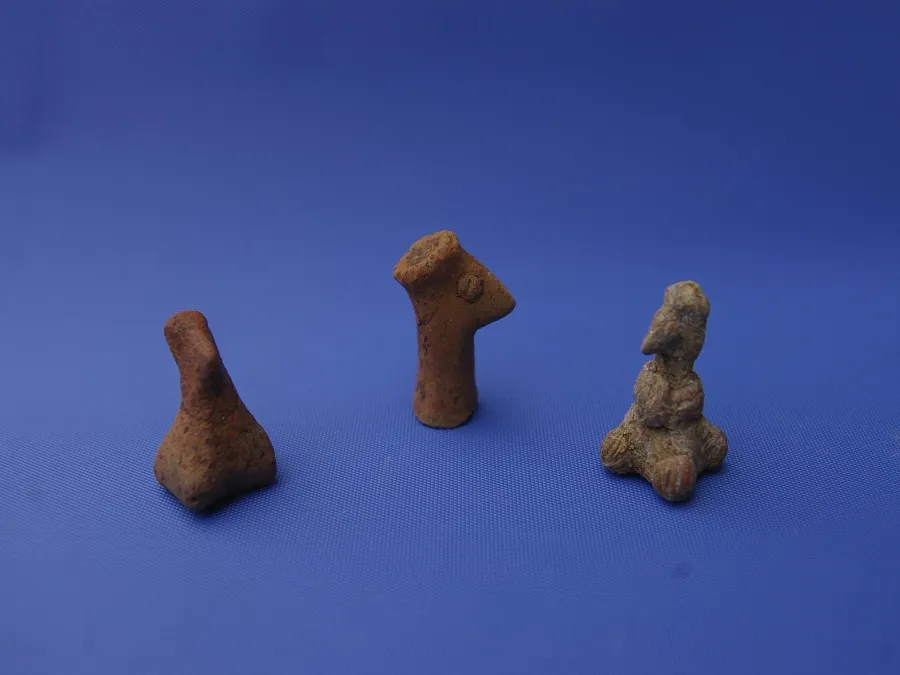
Archaeologists at a Neolithic settlement in Greece have discovered over 300 clay figurines — some that look like people, others that look like human-animal hybrids, all of which date back more than 7,000 years.
The little statuettes were scattered all over Koutroulou Magoula, a site about 160 miles (257 kilometers) from Athens that was occupied during the Middle Neolithic period (c. 5800 - 5300 B.C.). Researchers say Koutroulou Magoula was once home a few hundred people who made houses from stone and mud-bricks and subsisted by farming and keeping domestic animals. The archaeologists are still investigating what the artifacts say about the ancient settlement's culture.
"Figurines were thought to typically depict the female form, but our find is not only extraordinary in terms of quantity, but also quite diverse — male, female and non-gender specific ones have been found and several depict a hybrid human-bird figure," Yannis Hamilakis, co-director of the Koutroulou Magoula Archaeology and Archaeological Ethnography project, said in a statement.
"We still have a lot of work to do studying the figurines, but they should be able to give us an enormous amount of information about how Neolithic people interpreted the human body, their own gender and social identity and experience."
The site is about four times the area of a football field and features a mound up to 18 feet (5.5 meters) high with at least three terraces surrounded by ditches. Evidence from the site suggests some of the walls of the houses there were built entirely of stone, something that was not typical for the period, Hamilakis said. "The people would have been farmers who kept domestic animals, used flint or obsidian tools and had connections with settlements in the nearby area," the researcher added. "The construction of parts of the settlement suggests they worked communally, for example, to construct the concentric ditches surrounding their homes." Excavations at Koutroulou Magoula started in 2001 and the latest project began in 2010. The recent finds have not been described in a peer-reviewed scientific journal, and the project team — which includes archaeologists from the University of Southampton, the Greek Archaeological Service and the British School at Athens — will carry out two study seasons in 2013 and 2014.
Follow LiveScience on Twitter @livescience. We're also on Facebook & Google+.
Get the world’s most fascinating discoveries delivered straight to your inbox.
