














Sun Rings In New Year with Solar Eruption

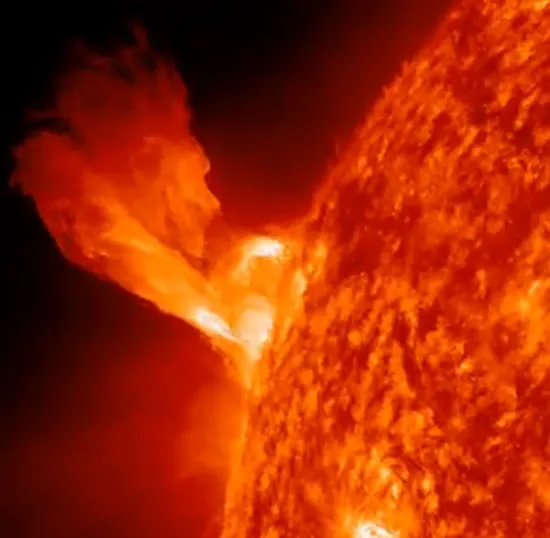
As people around the world rang in the New Year to celebrate Earth's latest trip around the sun Monday night, our closest star marked the occasion with some fireworks of its own — a dazzling solar eruption.
The space fireworks occurred on New Year's Eve (Dec. 31) during a four-hour eruption on the sun. NASA's Solar Dynamics Observatory captured a video of the solar event. The video shows a bright plume of super-magnetic plasma erupting from the sun's surface.
"A very nice display of solar activity — it's a New Year's Eve Ballet," SDO officials wrote in a video description posted on YouTube by the mission mascot Camilla Corona SDO, a public outreach effort.
The SDO spacecraft is one of several sun-watching space telescopes keeping taps on solar flares and other sun weather events.
The sun is currently in an active phase of its current 11-year weather cycle, which scientists have dubbed Solar Cycle 24. The sun's activity cycle is expected to reach its peak (or "solar maximum") in 2013, astronomers have said.
"The sun has had sunspots every day in 2012. Solar max here we come!" SDO mission officials wrote in a Twitter post last week.
This story was provided by SPACE.com, a sister site to Live Science. Follow SPACE.com on Twitter @Spacedotcom. We're also on Facebook & Google+.
Get the world’s most fascinating discoveries delivered straight to your inbox.
