














Seafloor Observatory Reveals Arctic Ocean Environment

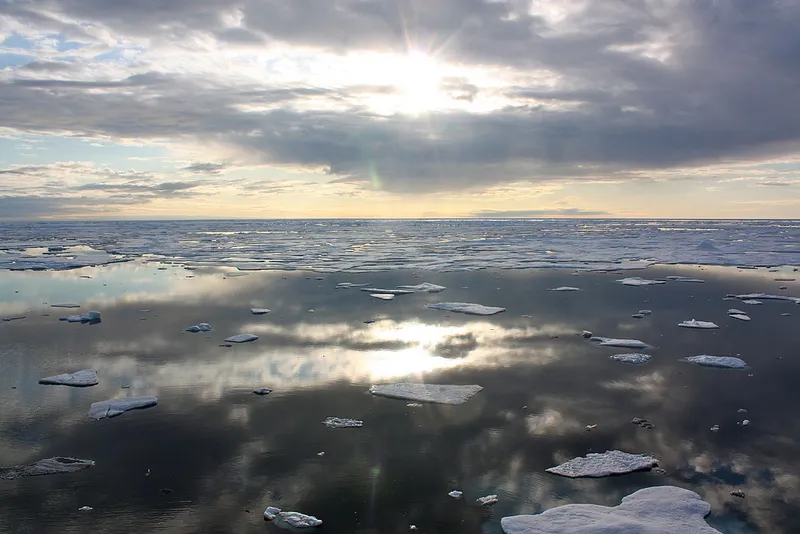
A new observatory at the bottom of the Arctic Ocean will help keeps tabs on the delicate environment, relaying information continuously throughout the year for the first time ever, according to a release from Canada's University of Victoria, which runs the station.
The observatory includes an underwater camera, microphone and a device that can measure ice thickness, as well as instruments to measure temperature, salinity and other data that can be used to monitor the health of the environment. There is also an above-ground weather station to track local weather patterns and climate data.
University of Victoria researchers finished installing the observatory's instruments in late 2012 before frigid conditions could halt their progress. It's located in Cambridge Bay, in the Canadian province of Nunavut, north of the Arctic Circle. Information from the observatory can be found online.
The design of the new observatory is based in part on two larger networks of seafloor monitors off the coast of British Columbia's Victoria Island, named VENUS and NEPTUNE. The latter is made up of six different instrument stations that gather data on plate tectonics, hydrothermal vents anddeep sea creatures.
The new observatory will "support longer-term science-based understanding of the dramatic changes taking place in Arctic waters," said Kim Juniper, with NEPTUNE Canada, in a statement from the University of Victoria. "These changes include the historic receding of the northern sea ice and its impact on marine ecosystems."
Reach Douglas Main at [email protected]. Follow him on Twitter @Douglas_Main. Follow OurAmazingPlanet on Twitter @OAPlanet. We're also on Facebook and Google+.
Get the world’s most fascinating discoveries delivered straight to your inbox.
