Image Gallery: A Tiny Creature with Bizarre Features
Get the world’s most fascinating discoveries delivered straight to your inbox.
You are now subscribed
Your newsletter sign-up was successful
Want to add more newsletters?
Delivered Daily
Daily Newsletter
Sign up for the latest discoveries, groundbreaking research and fascinating breakthroughs that impact you and the wider world direct to your inbox.
Once a week
Life's Little Mysteries
Feed your curiosity with an exclusive mystery every week, solved with science and delivered direct to your inbox before it's seen anywhere else.
Once a week
How It Works
Sign up to our free science & technology newsletter for your weekly fix of fascinating articles, quick quizzes, amazing images, and more
Delivered daily
Space.com Newsletter
Breaking space news, the latest updates on rocket launches, skywatching events and more!
Once a month
Watch This Space
Sign up to our monthly entertainment newsletter to keep up with all our coverage of the latest sci-fi and space movies, tv shows, games and books.
Once a week
Night Sky This Week
Discover this week's must-see night sky events, moon phases, and stunning astrophotos. Sign up for our skywatching newsletter and explore the universe with us!
Join the club
Get full access to premium articles, exclusive features and a growing list of member rewards.
Hidden Gem
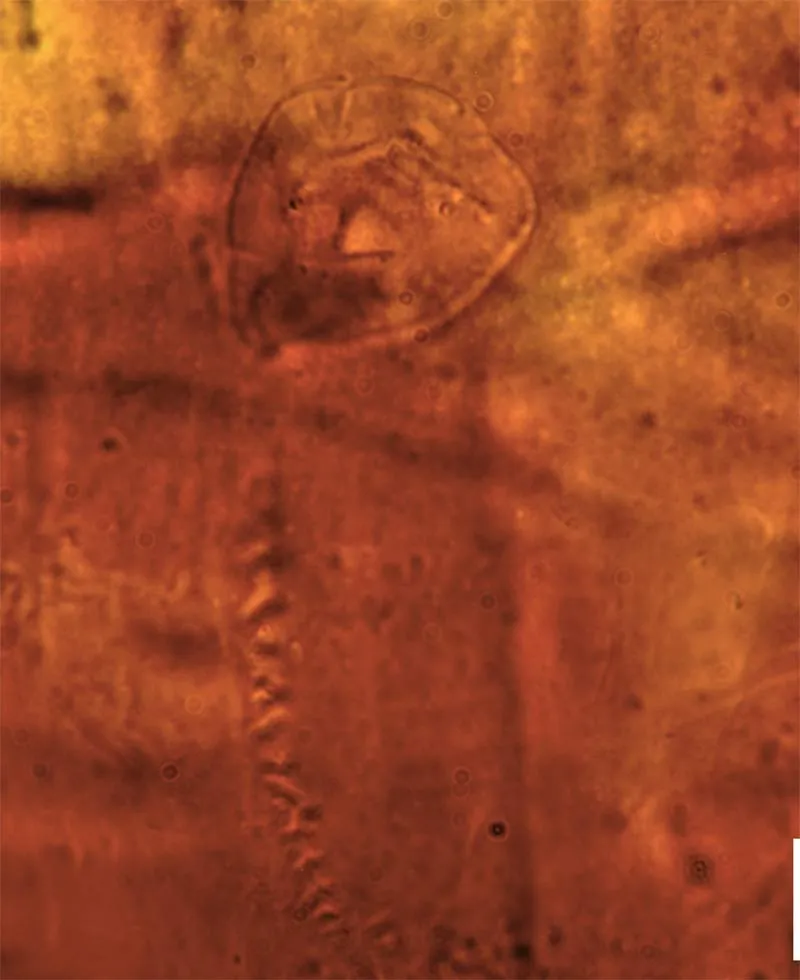
About 200 million years ago, a leech released a slimy mucous cocoon that unwittingly encased and trapped a bizarre animal with a springy tail, preserving it for eternity, or until researchers discovered the teardrop-shape creature in Antarctica recently.
Fast Contractor
The critter most closely resembled the genus Vorticella, more specifically, Vorticella campanula, whose rapidly contracting stalk was found to be one of the world's fastest cellular engines.
They're Eukaryotes!
Teensy bell animals like this one, Vorticella, also sport a nucleus inside the main body.

Leech Cocoon
The bell animal was trapped inside a leech cocoon, much like this one.
Lush Antarctica?
The cocoon was found in the Timber Peak section of the Transantarctic Mountain Range. When the bell animal was alive, this area would have been a dense rain forest, as Earth was much warmer back then.
Bell Animal
The Triassic Vorticella-like fossil (square in image focuses on the creature encased in cocoon) seen inside the cocoon wall. Like other eukaryotes, the Vortella animal was equipped with a nucleus, in this case a large horseshoe-shape nucleus inside the main body (C).
Springy Stalk
Past research has suggested Vorticella's coiled stalk, which is used to attach to substrates, may be one of the fastest cellular engines known, changing from a telephone wirelike structure to a tight coil at a speed of about 8 centimeters per second — the equivalent of a human being walking the across more than three football fields in one second. In that research, MIT's Danielle Cook France and colleague used high-speed microscopes and special chemicals that could freeze the stalk in mid-coil, allowing them to take snap-shots of the stalk (shown here) as it contracted.
Get the world’s most fascinating discoveries delivered straight to your inbox.
Live Vorticella
Here, live Vorticella visualized using a high-speed microscope developed at MIT.
Jeanna Bryner is managing editor of Scientific American. Previously she was editor in chief of Live Science and, prior to that, an editor at Scholastic's Science World magazine. Bryner has an English degree from Salisbury University, a master's degree in biogeochemistry and environmental sciences from the University of Maryland and a graduate science journalism degree from New York University. She has worked as a biologist in Florida, where she monitored wetlands and did field surveys for endangered species, including the gorgeous Florida Scrub Jay. She also received an ocean sciences journalism fellowship from the Woods Hole Oceanographic Institution. She is a firm believer that science is for everyone and that just about everything can be viewed through the lens of science.