














Rare Research Opportunity in Arctic Extended to U.S. Students
This Research in Action article was provided to LiveScience in partnership with the National Science Foundation.
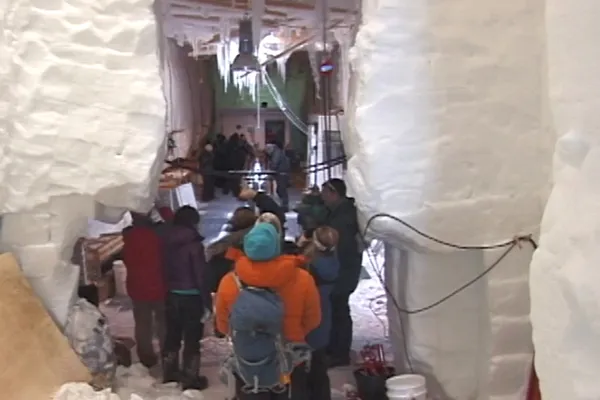
For three weeks in July, high school students from across the United States had a rare opportunity to work alongside an international team of research scientists in Greenland. The Joint Science Education Program is a cultural and scientific exchange led by teachers from Denmark, Greenland and the U.S. The three-week JSEP experience was divided into two parts: the Greenlandic-led Field School — which took place in and around Kangerlussuaq — and Science Education Week, in which students visited Danish and U.S. research stations on the Greenland Ice Sheet. The National Science Foundation coordinates the Science Education Week program. With experiences that ranged from descending into a pit to see how annual snow turns into ice layers, to extracting core samples from the ice sheet, the students came away with a new appreciation for the realities of research and a renewed interest in science as a career.
Editor's Note: Any opinions, findings, and conclusions or recommendations expressed in this material are those of the author and do not necessarily reflect the views of the National Science Foundation. See the Research in Action archive.
Get the world’s most fascinating discoveries delivered straight to your inbox.