













Dodging Icebergs, Yachts Chase $1 Million Prize

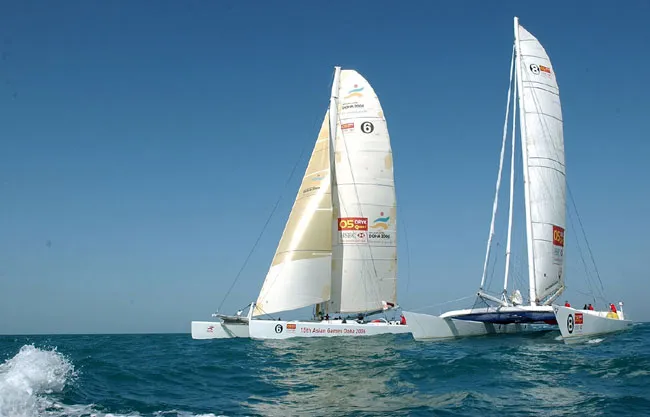
The prize: $1 million. The risk: slamming into an iceberg.
A nonstop yacht race around the world began on Feb. 5 in Doha, capital of the Gulf State of Qatar. Three of the world's seven multi-hull super yachts are competing for the million-dollar prize. All of the yachts are greater than 100 feet (30 meters) long and can reach speeds of 40 knots (46mph).
Not the sort of pace you want to pack into an iceberg. To avoid such a calamity, the trans-global Oryx Quest 2005 is getting help from some ice-sensitive radar satellites.
The crews are expected to complete the 25,000-mile (40,000-kilometer) journey in 50 days. They are currently rounding the infamous Cape Horn, heading east, on their way back to Doha.
The course takes the yachts through the stormy Southern Ocean, which is home to many icebergs - some extending several hundred yards beneath the surface of the sea.
Large icebergs can be detected by a yacht's onboard radar, but smaller icebergs, called "growlers" or "bergy bits," are not so easily seen. That is where the satellites come in.
"Icebergs typically have a stronger radar signal return than the open ocean," said Desmond Power of C-CORE, a Canadian company providing the iceberg detection service as part of a consortium called The Northern View.
Get the world’s most fascinating discoveries delivered straight to your inbox.
Radar data from the European Space Agency's Envisat and the Canadian Space Agency's Radarsat satellites is used to identify areas of icebergs. The safest option for the yachts is to give these areas a wide berth.
"Icebergs are one of those things you really never want to see," said meteorologist Chris Bedford of Sailing Weather Services. "So if the racers never spot one that will count as success."
