Extra Giant Planet May Have Dwelled in Our Solar System

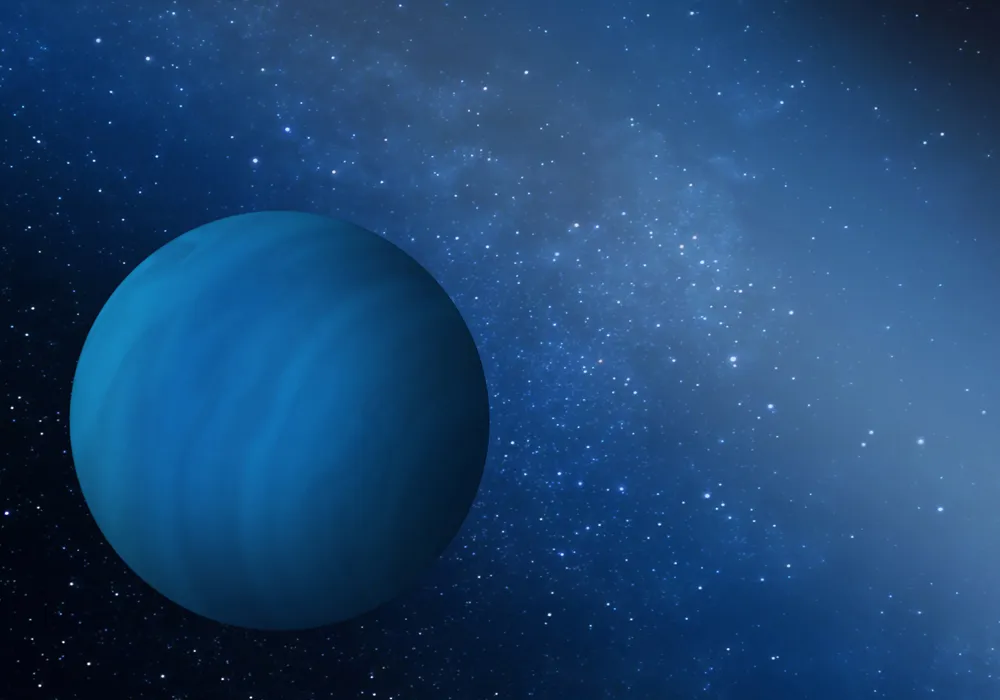
Within our solar system, an extra giant planet, or possibly two, might once have accompanied Jupiter, Saturn, Neptune and Uranus.
Computer models showing how our solar system formed suggested the planets once gravitationally slung one another across space, only settling into their current orbits over the course of billions of years.
During more than 6,000 simulations of this planetary scattering phase, planetary scientist David Nesvorny at the Southwest Research Institute in Boulder, Colo., found that a solar system that began with four giant planets only had a 2.5 percent chance of leading to the orbits presently seen now. These systems would be too violent in their youth to end up resembling ours, most likely resulting in systems that have less than four giants over time, Nesvorny found.
Instead, a model about 10 times more likely at matching our current solar system began with five giants, including a now lost world comparable in mass to Uranus and Neptune. This extra planet may have been an "ice giant" rich in icy matter just like Uranus and Neptune, Nesvorny explained.
The computer model allowed Nesvorny to create a video of the potential extra planet's departure from our solar system.
When the solar system was about 600 million years old, it underwent a major period of instability that scattered the giant planets and smaller worlds, researchers said. Eventually, gravitational encounters with Jupiter would have flung the mystery world to interstellar space about 4 billion years ago.
As fantastic as these findings might sound, a large number of free-floating worlds have recently been discovered in interstellar space, Nesvorny noted. As such, the ejection of planets from solar systems might be common.
Get the world’s most fascinating discoveries delivered straight to your inbox.
"The work raises interesting questions about the early history of the outer solar system," Nesvorny told SPACE.com. "For example, traditionally, most research was focused on the giant planets, their satellites, Kuiper belt objects, and their interaction — that's what we have in the outer solar system now. But how about Mars to super-Earth-size bodies? Have such objects formed on the outer solar system and were eliminated later? If not, then why?"
"This is just a beginning," Nesvorny said. "It will need quite a lot of work to see if there actually was the fifth planet. I am not fully convinced myself."
Nesvorny's research is detailed online in the journal Astrophysical Journal Letters.
This story was provided by SPACE.com, a sister site to LiveScience. Follow SPACE.com for the latest in space science and exploration news on Twitter @Spacedotcom and on Facebook.