













Shoppers Pay Less Attention to Nutrition Labels Than They Think
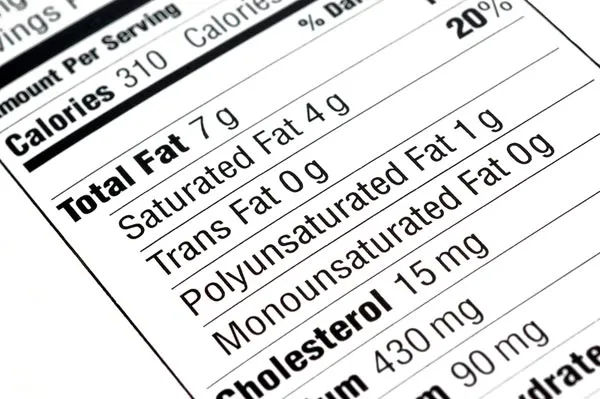
Even health-conscious shoppers who read nutrition labels pay much less attention to the information than they think they do, according to a new study.
Researchers found that 33 percent of study participants said they "almost always" look at calorie content onlabels, but only 9 percent of them looked at the calorie count of almost all of the products during an experiment.
And an eye-tracking device determined that only about 1 percent of participants looked at the information about total fat, trans fat, sugar and serving size on nearly all labels, even though31 percent of participants said that they almost always look at the total fat content, 26 percent said the same regarding serving size, 24 percent said they look at sugar content and 20 percent said they look at trans-fat content.
"The results of this study suggest that consumers have a finite attention span for nutrition facts labels: although most consumers did view labels, very few consumers viewed every component on any label," wrote study researchers Dan J. Graham and Robert W. Jeffrey of the University of Minnesota's Division of Epidemiology and Community Health.
Inattention to health information
The researchers asked 203 people toparticipate in a simulated grocery shopping exercise. The shoppers knew that their eye movements would be tracked, but did not know that the researchers would specifically focus on their observation of nutrition information.
The participants viewed 64 grocery items displayed on a computer monitor. [New Food Nutrition Symbol: What Will It Look Like?]
Get the world’s most fascinating discoveries delivered straight to your inbox.
The participants were separated into three groups, so that one-third saw the nutrition facts label on the left, one-third saw it on the right and the remaining third saw it in the center of the package. After viewing each product, the participants were asked whether they would consider purchasing the item.
The study found that most shoppers look at labels at the top of the packaging more than those at the bottom. And the participants read 61 percent of the label when it was in the center of the package, while participants who saw the labels on the left-hand side only read 37 percent of the labels. Those who saw the labels on the right-hand side read 34 percent of the information.
In addition, participants looked at nutrition facts labels in the center for more than 30 percent longer than the labels to the right or left side.
"Consumers are more likely to view centrally located labels and nutrients nearer the label's top," the authors wrote.
The findings also suggested that the average consumer reads only the top five lines of a nutrition label.
Pass it on: Grocery shoppers spend less time reading nutrition information on labels than they think they do, and the location of the label plays an important role in whether it will be read.
Follow Remy Melina on Twitter @remymelina, and follow MyHealthNewsDaily @MyHealth_MHND. Like us on Facebook.