













Giants on Ice: Gallery of Walruses

Tagging Walruses

In July 2010, scientists traveled to the Chukchi and Bering seas to radio-tag walruses.
Walrus Whereabouts

USGS scientists can follow radio-tagged walruses remotely as they move around the Arctic Basin.
Walrus Watching

Scientists prepare to radio-tag walruses in the Chukchi sea to track movements as sea ice is reduced in the region. (Photo taken June 8, 2009)
Growing Pains

Walrus calves are ashen gray to brown in color and weigh about 99 to 165 pounds (45-75 kg) at birth; within a few weeks, the calves turn reddish brown. Here, a female walrus and her pup on an ice floe in the Chukchi Sea.
Mama and Pup

Female walruses can weigh up to 2,700 pounds (1,225 kilograms) and so require thick enough pack ice to support their heft. Here, a female walrus and her pup on an ice floe in the Chukchi Sea in June 2010.
Walrus Haul-Out

Walruses gathered on Alaskan shores of the Chukchi Sea by the tens of thousands in late August and September of 2010 after the last of the sea ice dissipated.
Two Walrus Haul Outs
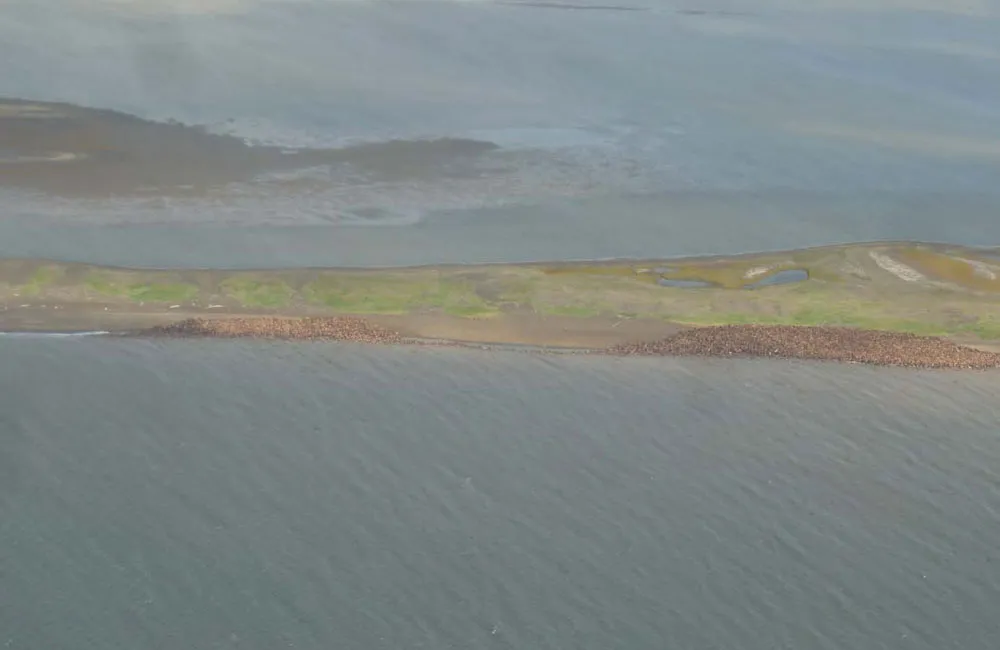
Two large walrus haul-outs, estimated to contain 8,000 animals total, were sighted on Aug. 17, 2011. The haul-outs were located slightly north of Alaska, and separated from one another by a very short distance.
Get the world’s most fascinating discoveries delivered straight to your inbox.
Large and in Charge

Walruses are so huge their only natural predators are the orca (killer whale) and the polar bear.
Tooth Walk

Walruses use their tusks to haul themselves out of the water. Their scientific name Odobenus baino comes from Greek words meaning "tooth walk." Here a close-up of a walrus in the Chukchi Sea.
Summer Ice

Normally, the walruses, particularly females with calves, rest on the drifting sea ice between food dives during the summer. Here the animals rest on an ice floe in the Chukchi sea in July 2010.
Resting on Ice

Walruses feed on mollusks, clams and other animals they retrieve by diving from floating ice to the seafloor. Here, the giants are resting on an ice floe in the Chukchi sea.
