
 Live Science Plus


Secret Weapons

Diving Beetle

This beetle is a predator that dives to hunt. It's a good swimmer and can even feed on small fish. No prey is safe, as Thermonectus marmoratus can also fly from one pond to another. If attacked, these beetles emit steroids that are toxic to fish and amphibians.
Earwig

The pincers of an earwig look fearsome, but to other small creatures it's a spray of chemicals from the abdomen that prove bothersome. The spray is conveniently directed toward the pincers.
Caterpillar

An ant trying to bite into this moth caterpillar, Dalcerides ingenita, will have its mouth gummed up by a sticky coating on the caterpillar's warts.

Bug with a Beak

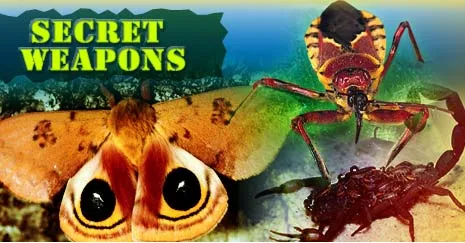
This bug, Apiomerus flaviventris, has a beak for injecting insect prey with a venomous salivary fluid. The bite can be painful to people, too. The critter also emits strong odors for defense when disturbed.
Vinegaroon

Don't try this at home! Bothered by forceps, Mastigoproctus giganteus discharges a highly concentrated dose of acetic acid (the sour component of vinegar) via the gland openings at the base of the whip that it can point in any direction with high accuracy. The spray repels ants, mice and other predators.
Scorpion

The venom of scorpions, delivered by the tail, varies greatly. Though many people fear them, a sting from most scorpions is typically about as painful as a bee sting and rarely fatal. But there are a handful of potentially deadly species, including the bark scorpion in the U.S. Southwest.
Moth

When threatened, Automeris io spreads its wings to reveal a startling pair of "eyes." In studies, captive birds have been startled by the display. Exactly the point, no doubt.
Get the world’s most fascinating discoveries delivered straight to your inbox.
Honey Bee
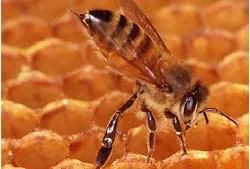
The sting of a bee can kill people who are allergic. More people in the United States die from bee stings than from snakes, spiders or any other venomous creature. Only females have a stinger, and sterile females make up the bulk of the working class in a hive. A bee drives its stinger into the victim and leaves it there; the venom is released when the bee departs. Losing its hind end dooms the bee to death.
Florida Woods Cockroach

In the abdomen of Eurycotis floridana is a gland that produces a secretion with 40 components, including acids, ether and the smelly substance known from stink bugs. It can squirt the stuff 6 inches or more. In your eyes, it would be excruciatingly painful. Mice and lizards don't like it either.
Centipede

The many legs of a centipede (usually less than 100, by the way) make them creepy. But take a look at these fangs! The front and back of many centipedes look similar. If you mistakenly pick up the back, they'll coil and bite. This scolopendrid centipede eats mostly bugs but is known to take on toads and mice. And why not? It can grow to nearly a foot long.
