













Yuck! Photos of 'Rock Snot' Algae Infestations

Yuck!

Didymo, also known as "rock snot," is a type of freshwater algae that clumps on rocks and invades river bottoms.
Tendrils of Rock Snot

Didymo, also known as "rock snot," is a type of freshwater algae.
Lots of Clumps

Clumps of didymo, or rock snot, can be seen attached to this rock.
Rock Snot Blooms

Rock snot is so-called because of the way its tendrils attach to rocks in rivers.
Covering the River Floor
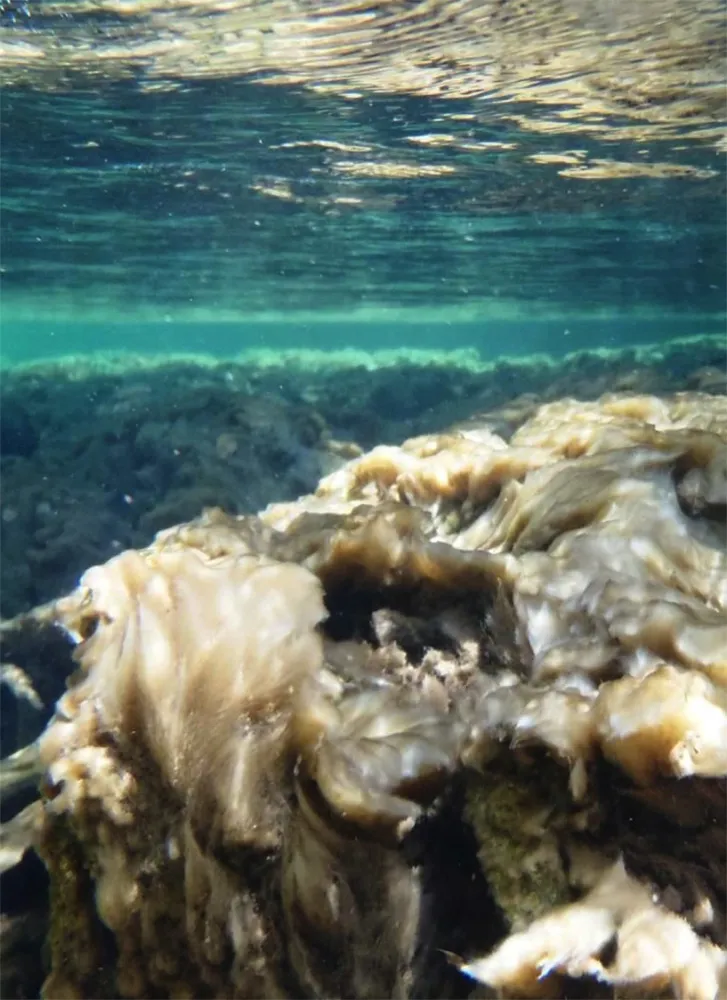
A didymo mat several centimeters thick covers the rocky substrate of the crystal clear Duval River. Thick and extensive blooms are known to affect the structure and function of river ecosystems. Didymo’s recent proliferation is likely unprecedented in eastern Canada and elsewhere around the world.
Hands Full
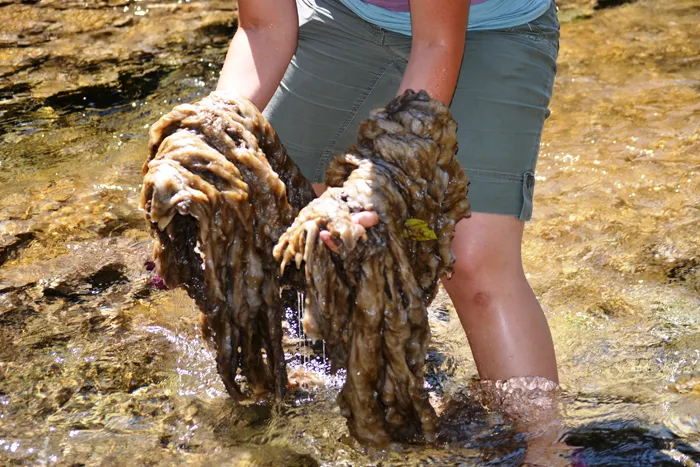
In 2013, the Duval River (tributary of the renowned Bonaventure River) experienced the most severe didymo bloom ever recorded in eastern Canada and comparable to extreme blooms observed over the past decade in New Zealand. In eastern Canada, recent climate warming may play a role in the establishment of conditions that favor didymo proliferation. Other Canadian provinces where didymo blooms have been identified as a concern include British Columbia and Alberta.
Spreading Rock Snot

Scientists think rock snot moves into new areas via contaminated fishing equipment and boats.
Get the world’s most fascinating discoveries delivered straight to your inbox.
Small Scale

A didymo cell and extracellular stalk produced through asexual reproduction.
Dried Rock Snot

Dried masses of didymo above the water line in Arkansas.
Didymo Cell

A scanning electron micrograph of a cell of didymo, a type of freshwater algae.

Denise Chow was the assistant managing editor at Live Science before moving to NBC News as a science reporter, where she focuses on general science and climate change. Before joining the Live Science team in 2013, she spent two years as a staff writer for Space.com, writing about rocket launches and covering NASA's final three space shuttle missions. A Canadian transplant, Denise has a bachelor's degree from the University of Toronto, and a master's degree in journalism from New York University.