














Leaf Peeper Paradise: Autumn's Best Colors
Fall Foliage
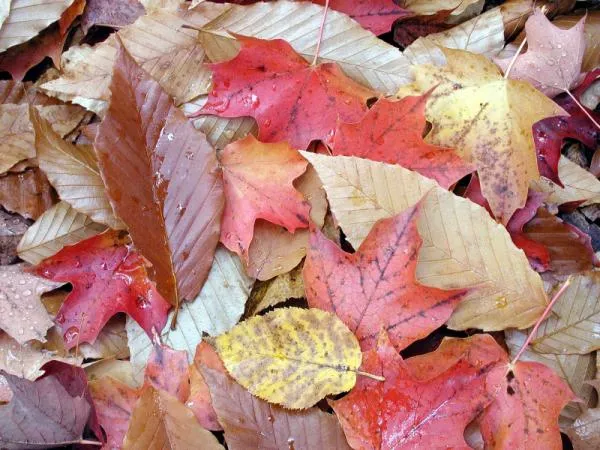
The days are getting shorter, sleeves are getting longer, and autumn's display of fiery color is just getting underway in North America's cooler climes.And although the annual show is beautiful to behold, it also serves a very practical purpose. Trees are getting ready for the onslaught of winter, using a controlled, step-by-step process, according to Kevin T. Smith, a longtime plant physiologist with the USDA Forest Service in Durham, New Hampshire."Trees are very smart," Smith said. "They don't really waste anything."To survive through the dark winter months, trees hoard their energy; lucky for us, the power-down process has some lovely side effects.Take a trip now to a few prime spots for leaf peeping some traditional, some surprising and learn about the biological strategizing behind the season's changes along the way.
Prince Edward Island

Our first stop is the northernmost destination on this leaf-gazing ramble, and appropriately so, since it is cool weather and fewer daylight hours that trigger fall's leafy transformation; the higher the latitude, the earlier leaves begin to change.Prince Edward Island's fall show begins mid-September, and generally peaks around the second week of October.
Prince Edward Island

The island, the smallest of the Canadian provinces, is home to a variety of showy fall species: maple, oak, birch, quaking aspen and poplar, each contributing its own hue to the polychrome landscape.The variety of colors, said tree expert Kevin Smith, is a result of the different strategies trees use to cope with approaching freezing weather."The tree does a couple of different things," Smith said. Like a gentle, self-sustaining vampire, the tree starts sucking 'the good stuff' out of its own leaves. "It starts pulling back amino acids and elements like magnesium, phosphorous and especially nitrogen."As a result, the green chlorophyll is slowly leached away, revealing the yellow and orange hues seen in some tree species come autumn. Red leaves are another story.
Prince Edward Island

Some of Prince Edward Island's loveliest fall foliage can be seen along a series of back country drives knows as the Scenic Heritage Roads. These red clay roads are off the beaten path, and trees often meet over the lonely throughways, creating a tunnel of autumn color.The canopy pictured above gets its crimson hue from a pigment called anthocyanin, the same component that lends red cabbage its intense color. Smith says that some species, most famously maples, produce anthocyanin during autumn as a kind of antioxidant for trees.
Anthocyanin

"In much the same way we take vitamin E or aspirin to help us slow down our aging process," Smith said, "that's what the tree is doing in producing that anthocyanin pigment."Smith said the crimson anthocyanin protects the delicate mechanisms that allow the tree to extract all the nutrients from its leaves.
Rangeley Lake Region, Maine

New England is renowned for its fall colors, and locals cite the drive north up Maine's Route 17, toward the Rangeley Lake area, as a favorite spot to see trees of every hue.This view from Saddleback Mountain shows off some of the red maples for which the region is famous.
Working backwards

This serene and sunny view was captured toward the southern end of Route 17, near Rumford, Maine.The trees in the Rangeley region, in the western edge of the state, generally peak around the first week of October.
Get the world’s most fascinating discoveries delivered straight to your inbox.
New Hampshire: White Mountains, Squam Lake

It's not just the changing leaves that make for a spectacular autumn view. Many people enjoy the contrast of bright foliage against the subdued, constant shades of evergreens.Kevin Smith says that, although it's not visible to the naked eye, coniferous trees have their own strategies for staying alive through the chilly months, using a kind of antifreeze made from sugar compounds to survive. "It's just a different way to get through the winter," he said.Smith himself is partial to views like this one, which offer what he calls a "Persian rug effect.""If trees did things all the same way all the time it wouldn't be very interesting," he said. "It would make fall way more boring."
New Hampshire: White Mountains, Squam Lake

Silvery bark and sunset-colored leaves make for an enchanting combination near Bartlett, N.H., a tiny island of civilization surrounded by the White Mountain National Forest in central New Hampshire.
Midwest Shout-out

Before we head to some autumn roads less traveled, no fall foliage tour is complete without a stop in the Midwest. This shot, from Michigan's beautiful Upper Peninsula, captures the very beginning of the region's transition to fall. The first blush of color on the leaves stands out against the darkness of the storm clouds.It's hard to tell ahead of time if a particular year will be a good one for fall foliage. The intensity of the annual display is dependent on a complicated matrix of variables related to moisture and temperature.And although it's not a double rainbow, this one is still pretty darn intense.
Autumn Surprises

New England doesn't have a monopoly on fall color in the United States. For some crimson glory south of the Mason-Dixon Line, head to ... Texas? Yes, the Lone Star State has some fall frippery to call its own.The Lost Maples State Natural Area, about an hour and a half outside of San Antonio, is full of the autumn beauties. Covering more than 2,000 acres, the park features an unusually isolated stand of Bigtooth Maple, a variety native to the western United States.