Live Science Plus


You are now subscribed
Your newsletter sign-up was successful
Want to add more newsletters?

Delivered Daily
Daily Newsletter
Sign up for the latest discoveries, groundbreaking research and fascinating breakthroughs that impact you and the wider world direct to your inbox.

Once a week
Life's Little Mysteries
Feed your curiosity with an exclusive mystery every week, solved with science and delivered direct to your inbox before it's seen anywhere else.

Once a week
How It Works
Sign up to our free science & technology newsletter for your weekly fix of fascinating articles, quick quizzes, amazing images, and more

Delivered daily
Space.com Newsletter
Breaking space news, the latest updates on rocket launches, skywatching events and more!

Once a month
Watch This Space
Sign up to our monthly entertainment newsletter to keep up with all our coverage of the latest sci-fi and space movies, tv shows, games and books.

Once a week
Night Sky This Week
Discover this week's must-see night sky events, moon phases, and stunning astrophotos. Sign up for our skywatching newsletter and explore the universe with us!
Join the club
Get full access to premium articles, exclusive features and a growing list of member rewards.
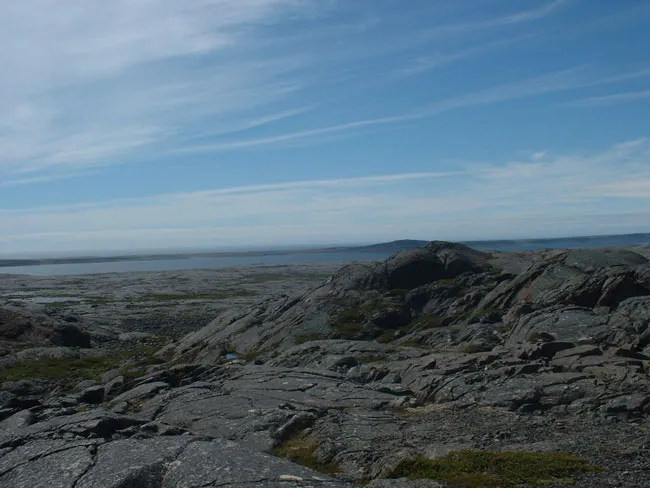
Scientists have found the oldest known rocks on Earth. They are 4.28 billion years old, making them 250 million years more ancient than any previously discovered rocks.
Earth formed about 4.6 billion years ago from a disk of gas and dust circling the sun. Remnants of crust from Earth's infancy are hard to come by because most of that material has been recycled into Earth's interior several times by the plate tectonics that continue to shape our planet's surface.
Suspecting that the rocks there could be from one of the earliest periods of Earth's history, geologists took samples to try and determine their age. They measured tiny variations in the isotopes (or species of an element that have different numbers of neutrons) of the rare earth elements neodymium and samarium in the rocks and determined that the samples were from 3.8 to 4.28 billion years old.
The oldest dates, which came from rocks that geologists call "faux amphibolite," are thought to be ancient volcanic deposits. They beat the previously oldest known rocks, which are 4.03 billion years old and come from a formation called the Acasta Gneiss in Canada's Northwest Territories.
The only dates of crustal material older than the newly-dated Nuvvuagittuq greenstone belt are from isolated mineral grains called zircons that are highly resistant to weathering and geologic processes. The oldest zircons, from grains in Western Australia, are about 4.36 billion years old.
The Nuvvuagittuq rocks are "the oldest whole rocks found so far" though, said geologist Richard Carlson of the Carnegie Institution, who analyzed the rocks with Jonathan O'Neil, a Ph.D. student at McGill University in Montreal. The team's findings are detailed in the Sept. 25 issue of the journal Science. Their work was supported by the National Science and Engineering Research Council of Canada, the U.S. National Science Foundation and the Carnegie Institution of Washington.
Examining such ancient rocks "gives us an unprecedented glimpse of the processes that formed the early crust," Carlson said.
- 101 Amazing Earth Facts
- Crusty Old Discovery Reveals Early Earth's History
- What Makes Earth Special Compared to Other Planets