 Live Science Plus






Argentine Wildlife Gain 2 New Marine Parks
You are now subscribed
Your newsletter sign-up was successful
Want to add more newsletters?

Delivered Daily
Daily Newsletter
Sign up for the latest discoveries, groundbreaking research and fascinating breakthroughs that impact you and the wider world direct to your inbox.

Once a week
Life's Little Mysteries
Feed your curiosity with an exclusive mystery every week, solved with science and delivered direct to your inbox before it's seen anywhere else.

Once a week
How It Works
Sign up to our free science & technology newsletter for your weekly fix of fascinating articles, quick quizzes, amazing images, and more

Delivered daily
Space.com Newsletter
Breaking space news, the latest updates on rocket launches, skywatching events and more!

Once a month
Watch This Space
Sign up to our monthly entertainment newsletter to keep up with all our coverage of the latest sci-fi and space movies, tv shows, games and books.

Once a week
Night Sky This Week
Discover this week's must-see night sky events, moon phases, and stunning astrophotos. Sign up for our skywatching newsletter and explore the universe with us!
Join the club
Get full access to premium articles, exclusive features and a growing list of member rewards.
Two new large wildlife reserves have been created in Argentina's Patagonian coast, good news for the area's diverse wildlife.
The parks, Isla Pingüino Coastal Marine Park and Makenke Coastal Marine Park, are home to penguins, sea lions, dolphins and other animals, which will receive more protections under the designation, according to a release from Wildlife Conservation Society (WCS), an environmental group.
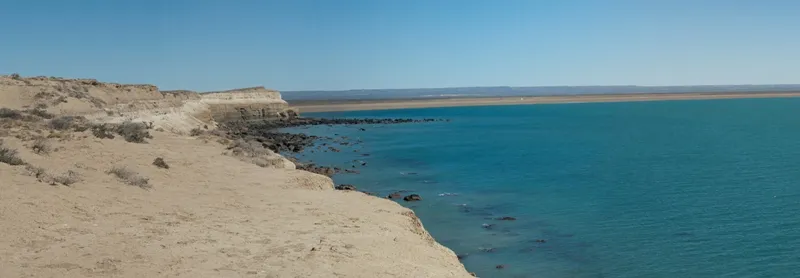
The Isla Pingüino Coastal Marine Park extends 12 miles (19 kilometers) out to sea, encompassing some 720 square miles (1,800 square kilometers) of ocean and cliff-bordered coastline. It's home to South American sea lions, red-legged cormorants and one of the biggest colonies of imperial cormorants in the world (with more than 8,000 breeding pairs). The park also hosts one of the only colonies of rockhopper penguins in the country, according to the WCS.
The Makenke Coastal Marine Park, farther to the south, is home to the biggest group of rare red-legged cormorants in the country. Visitors can also find dolphin gulls and Commerson's dolphins in the area, the WCS noted. [Photos of the new marine reserves.]
Each park, established by the Argentine National Congress, is known for its historical significance. In 1833, Charles Darwin voyaged to Isla Pingüino on the HMS Beagle, writing about the wildlife he found there. Ferdinand Magellan passed by what is now Makenke Coastal Marine Park on his first voyage around the world, marooning and executing a group of mutineers on the coast there.
"We commend the Government of Argentina for their conservation stewardship in creating this new network of marine protected areas," said Cristián Samper, WCS president, in a statement. "Isla Pingüino and Makenke Coastal Marine Parks now protect vital wildlife populations for posterity and create new opportunities for Argentina's ecotourism industry."
Email Douglas Main or follow him @Douglas_Main. Follow us @OAPlanet, Facebook or Google+. Original article on LiveScience's OurAmazingPlanet.

