
 Live Science Plus


Call of the Wild: How Predators Increase Diversity

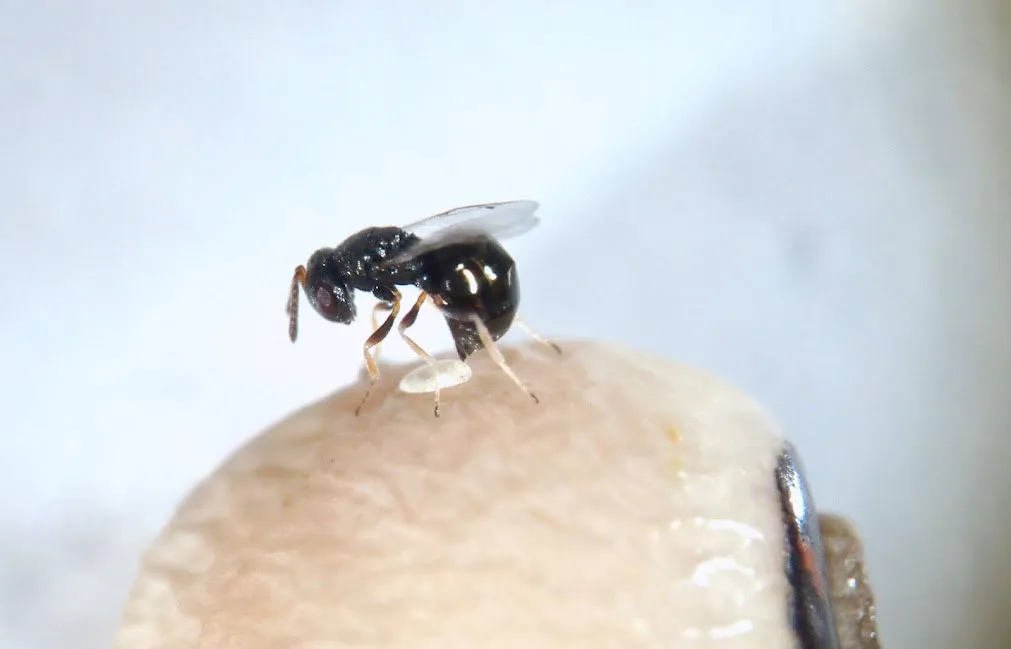
The struggle between predator and prey may seem savage and senseless to humans, but new research suggests it is not only essential for life on Earth, it also increases biodiversity.
Without the forces of one species preying on another, researchers found that species diversity drops.
"One of the key challenges of both ecology and evolutionary biology is to understand the mechanisms that maintain biodiversity," the researchers write in the study, published today (March 12), in the journal Proceedings of the National Academy of Sciences.

The researchers built a miniature world in their laboratory — they put two closely related species of bean weevils (Callosobruchus maculates and Callosobruchus chinensis) in lab enclosures, with and without a parasitic wasp, Anisopteromalus calandrae, which infects them.
At immature stages, the weevils live inside beans, chewing out when they reach maturity. They are a pest infecting many important crops. The parasitic wasp lays her eggs inside the weevil larvae in these beans.
Without the ever-present effects of a predator, one of the two weevil species would die off within 20 weeks, the researchers found. If they introduced the predator wasp into the lab ecosystem, all three would survive for 118 weeks (the length of the study — that's two years, three months and two weeks).
During this time, the populations would fluctuate: For a time C. maculates would be more abundant, then C. chinensis would make a climb. The parasitic wasp seems to learn and preferentially feed on whichever species was most abundant. Because the wasp can learn and switch between the two species, its presence is what enables them both to survive.
Without the predator's presence, the researchers saw that C. maculates consistently overran and killed off C. chinensis (the two weevils are competing for resources, like food and living space). "When the parasitoid was added, it reduced the effect of direct resource competition between the two host species by depressing host densities," the researchers write.
The researchers suspect the same would hold for larger species, for example, blue jays and moths. Previous studies have indicated that the jays preferentially eat the more abundant species of moth, similar to how the wasp preys on the most abundant weevil. The jay's preferential feeding may be an ecological driver increasing moth diversity.
"Predation has an important role in greatly enhancing the coexistence of prey populations, suggesting that predator learning affects predator-prey population dynamics and shapes biological communities in nature," the authors write.
You can follow LiveScience staff writer Jennifer Welsh on Twitter @microbelover. Follow LiveScience for the latest in science news and discoveries on Twitter @livescience and on Facebook.
