
 Live Science Plus



A New Twist On Old Painkillers
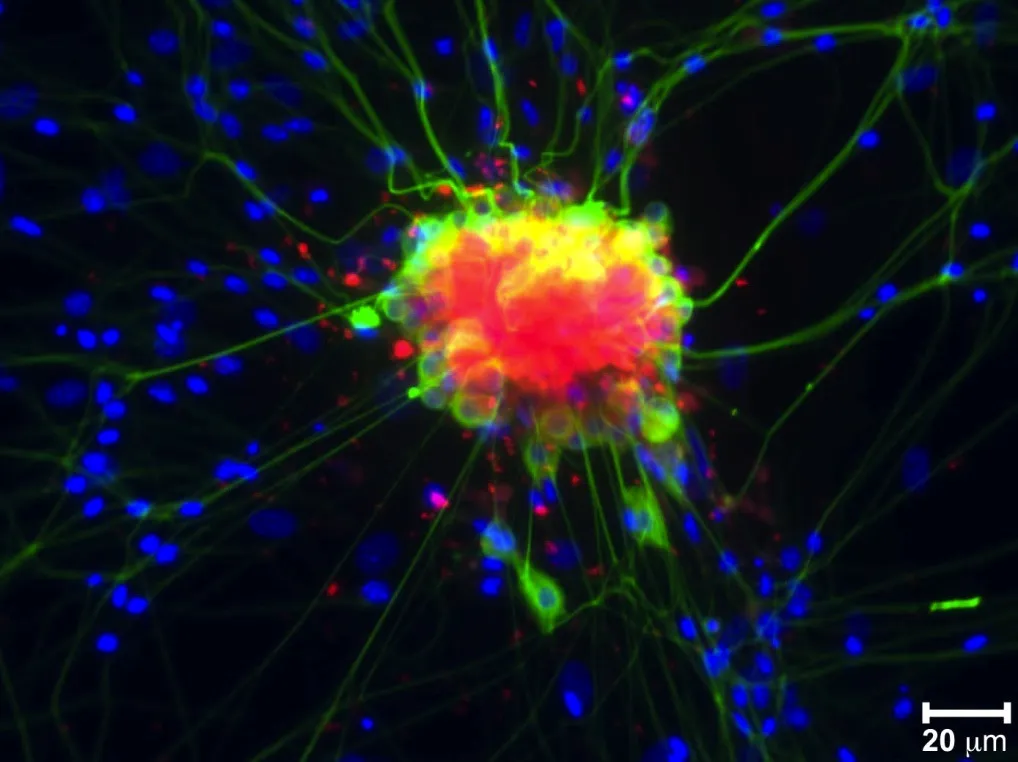
This Research in Action article was provided to LiveScience in partnership with the National Science Foundation.
Ever popped a couple of ibuprofen to ease pain or reduce inflammation? Ever wonder exactly how it works? Many scientists thought they knew, but a new study suggests they only had part of the answer.

While NSAIDs and other COX-2 inhibitors can be effective at relieving pain, they have a potential downside: They can also cause gastrointestinal and cardiovascular problems when taken long-term. Researchers have been looking for a way to avoid such side effects while preserving the drugs' pain-relieving action. A better understanding of how NSAIDs work is critical for such progress.
Scientists thought NSAIDs ease pain by preventing COX-2 from making a type of fat molucle called a prostaglandin, which cause inflammation. But as Vanderbilt University biochemist Lawrence Marnett and colleagues recently reported, NSAIDs can also block COX-2 from breaking down natural painkillers known as endocannabinoids. The increase in soothing endocannabinoids, in addition to a decrease in the number of inflammatory prostaglandins, account for the pain-relieving action of NSAIDs, said Marnett.
NSAIDs come in two molecular structures, called "right-handed" (R-forms) and "left-handed" (S-forms). What we get over the counter is a mixture of R- and S-forms. Scientists thought that S-form NSAIDs do the hard work by stopping COX-2 from making prostaglandins. Marnett found that the R-forms specifically target endocannabinoids.
What does this mean for the pills we take? R-form NSAIDs haven't been explored much in the drug industry, and they could provide a new class of painkillers that only boost soothing endocannabinoids, said Marnett. The hope is that R-form NSAID medicines would have the painkilling power of current NSAIDs but without the cardiovascular side effects associated with targeting prostaglandins.
This research was supported by the National Institutes of Health. To see more images and videos of basic biomedical research in action, visit NIH's Biomedical Beat Cool Image Gallery.
Editor's Note: Any opinions, findings, and conclusions or recommendations expressed in this material are those of the author and do not necessarily reflect the views of the National Science Foundation. See the Research in Action archive.