













Will language face a dystopian future? How 'Future of Language' author Philip Seargeant thinks AI will shape our communication
Brain-computer interfaces, AI and real-time censorship. Philip Seargeant tells us how modern tech is changing our language.


Technologies such as brain-computer interfaces, artificial intelligence (AI), predictive texting and autocomplete are already transforming language as we know it.
But how significant will that change be? And exactly what will those changes be? We sat down with Philip Seargeant, author of the book "The Future of Language" (Bloomsbury, 2024 ), to chat about what language is, why scientists spent years trying to create a special language for nuclear waste, and whether we'll ever live in a silent world devoid of spoken language.
Ben Turner: Let's start with a question that's much easier to ask than it is to answer: How do we define language?
Philip Seargeant: Language is so integral to our lives — our social lives and our mental lives — that often you get this sort of slightly simplistic idea of it being just a means of communication. Sure, it's a means of relaying information from one person to another, but that's really only a part of it. Language is tied up with the way that we organize society and our relationships, how we present our identity, and how we understand other people's identities. I think that's one of the things that we need to be mindful of as we try to get a handle on how new technologies are going to change the way we communicate.
BT: A key idea that you return to in the book is the myth of the Tower of Babel. It's a story that has articulated our desire to bridge the gaps between languages since history began. How close are we to AI acting as a universal translator between human languages? Is a universal translator even possible?
PS: These are very good questions. The Babel myth is an idea from fairly early in the beginning of history that suggests that language use is somehow impaired — that there's something wrong with it. It's the foundation of what it means to be human, yet at the same time, there's some sort of essential flaw in it. There's two aspects to that: One is that we can't speak across language barriers, and two [is] that how we use language isn't exact or precise enough.
It seems we're at a point where technologies will imminently allow for instantaneous, real-time translation between big languages (at least the ones we have enough data for). The quality of this translation is pretty good; it's very workable.
Get the world’s most fascinating discoveries delivered straight to your inbox.
My best guess is that it will work quite functionally for some things but will exist alongside the broader aspects of how we use language.

Philip Seargeant.
BT: It's interesting that humans call upon language to explain why we're so unique, yet we also feel insecure that we're not quite good enough at it.
PS: One of the reasons language is so endlessly flexible is because it lacks precision. Now we live in a world of "'fake news,'" where language is seen as unreliable and used for malicious purposes. The paradox is that language is so successful because it can be exploited and reshaped all of the time.
BT: A fascinating example in the book about the fickleness of language was the U.S. government's Human Interference Task Force, which, in order to warn future generations about where radioactive waste was buried, tried to predict the possible futures of the English language. But it failed. Why?
PS: Their problem was, how do you communicate to future generations when you know that, over the course of millenia, the English language will have changed to be almost unrecognizable?
Unless we had specifically learned it, you and I would not be able to read something from 1,000 years ago, and when we're talking about nuclear waste, it remains harmful for tens or hundreds of thousands of years. So how on Earth do we communicate a warning into the future when language doesn't have that stability? The whole point about language is that it's adaptable.

A proposed pictograph for a long-term nuclear warning message.
BT: In 1981, when the task force and the field of nuclear semiotics was founded, the scientists working on it came up with all sorts of mad proposals to communicate that danger — genetically engineering flowers and cats to glow around radiation, for instance. You mention that they realized that even symbols, such as a skull and crossbones, could lose the meaning they carry today over time.
PS: Pretty much, yeah. There's no intrinsic relationship between a word and a thing, or a symbol and a thing. We know that a skull and crossbones has a traditional meaning of a warning, but it could be interpreted another way. It's all about the meaning we put into it, and that's why it changes and continues to change to keep up with an evolving society.
BT: Just how much capacity does language have to change? Some tech moguls — notably, Elon Musk — have suggested that brain-computer interfaces could bypass spoken, embodied language altogether and put us in a wordless future. Is this likely, or is it the result of flawed thinking?
PS: I think it's just flawed thinking. It will be interesting to see what happens if this ever becomes mainstream and sits alongside how we communicate now, but it sounds like it's an awful long way off. Right now, people can tap out things on a keyboard using their brain waves very slowly.
Elon Musk has called the device attempting to do this "telepathy," but I think that's science fiction thinking bleeding into actual innovation. What that actual innovation will end up as seems unlikely to match some of his pronouncements.
Even if it does happen, I can't imagine it will supersede lots of the ways we use language. As we were saying, language isn't just about information transfer; the voice is integral to huge aspects of our lives. Take singing, for example — how are you going to do that telepathically? The whole creativity and identity aspect of language doesn't seem to fit into that model at all.
What often happens is that, instead of things replacing each other, new and old language technologies exist side by side and mix in interesting ways. I would imagine something along those lines being much more likely to happen.
BT: People had the same discussion when emoji first made their way into mainstream use — some feared that they would somehow supplant traditional words.
PS: Yes, and that hasn't happened at all either. Instead, you see them being used together, rather than what the discourse was, which is that we're going to forget how to write instead.
BT: Let's say we soon have brain-computer interfaces and AI acting as widespread intermediaries for languages. What are the implications for free speech?
PS: The thing about free speech is that the more mediation you have — the more people, organizations or apparatuses that sit between a person and their audience — the more chance there is for communication to be regulated. Laws [related to free speech] try to make sure that mediation can't be misused.
In the popular conversation about free speech, most of the discussion is about "Can I use this word or that word?" and so forth. But in the past, laws related to the freedom of the press enabled the press to publish what it wanted, and if it overreached the law, it would then be punished. But with AI, it's much easier to do that censorship at the moment someone is speaking.
Chinese social media, for example, filters out speech before you even get a chance to say it out loud, and you're not even going to know that because the filtering is embedded in the mediating technology.
That could very well be problematic, especially in terms of who owns the mediating technology — big companies who have mixed motivations, want good PR and don't want to be criticized. That's an issue, because it will become even more easy to intervene purely because of how the technology works.

A woman with ALS uses a brain computer interface to brain activity, detected by sensors implanted above her cerebral cortex, to make words appear on a screen.
BT: We're not necessarily in a hopeless situation, though, because as you mention in the book, people throughout history have always been very good at finding inventive ways to sidestep censorship.
PS: Yeah, it's still probably quite effective in China, and there are risks in circumventing it — especially when you consider the surveillance aspect of data. But people have always been historically pretty good at finding ways to push back on it.
That's the thing with free speech: It's never one thing or the other. It's always a continuing struggle, a constantly revised political battle. But it's because the technology is posing problems in a different and new way that one needs to keep on top of it.
BT: Stepping beyond human language for a moment, scientists are also using AI on whale songs in a bid to decode what they're saying. Is this even a remote possibility, in your view?
PS: Gosh. Basically, I think yes. Our fundamental experience of life is so different that language is just the first part of the challenge.
I imagine it's possible to understand how different species communicate in more nuanced ways with this sort of technology, but that's not the same as speaking to them. It's like trying to teach chimps sign language — it works insofar as there's some sort of communication possible between us and them anyway.
I think the assumption is that language is the answer to something that it's not. Like the idea of a universal language being the solution to world peace — it could help, but in practice, it's much more complicated.

A pod of sperm whales swims off the coast of Sao Miguel Azores. The animals are being studied by scientists working on the CETI project, which is attempting to use AI to decode their songs.
BT: Taking one step further, if language is so tied to our immediate experience and environment, how far can we really anticipate the problems of communicating one day with extraterrestrial intelligence?
PS: I'm by no means an expert on this, but I read a lot about it for the book. It's another interesting idea, and the challenge is that we just don't know. With animals, we know they exist in the first place, we know the kind of life they have, we know aspects of their cognitive abilities, and we know they can make sounds and gestures. With aliens, we don't even have that basic information.
That makes everything we say pure speculation, but the interesting thing is that that speculation helps us get a better idea of what human language is and does. Sending a message across millions of light-years and reaching anyone is highly unlikely, but it's still not pointless.
My book, as you say, is a history of futurism, and part of that history is science fiction. Science fiction feeds into actual technological innovation and the questions we ask ourselves, even though it's just fiction.
Language is fundamental, and because of that, it's hugely complex and there's still an awful lot that we have to learn and understand about it — even without considering all the technological aspects of it.
related stories
BT: What do you think we still need to learn?
PS: My particular interest is sociolinguistics — the relationship between language and society — but there are all sorts of interesting questions in cognitive linguistics and how we generate language in the brain, and there's not a lot of consensus out there.
And how we understand language, even if it's scientifically wrong, feeds into the way we use it. People think there's "correct" and "incorrect" grammar, for instance, and make judgments based on that, even if a sociolinguist will tell you that everything's equal from a scientific point of view.
I think there will always be evolving questions about language, so even if there are unresolved questions, it's not like there's ever going to be a settled knowledge about it.
Editor's note: This interview has been condensed and edited for clarity.
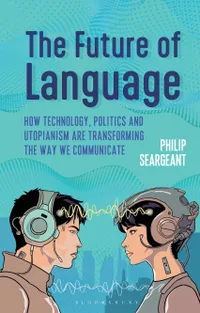
The Future of Language: New Technology, Politics and Utopianism Are Transforming The Way We Communicate - $24.03 on Amazon
If you enjoyed this interview with Philip Seargeant, you can read more about how technology is transforming language in his new book, "The Future of Language." It's a fascinating exploration of language's evolution, and how new technology may change it in the future.

Ben Turner is a U.K. based writer and editor at Live Science. He covers physics and astronomy, tech and climate change. He graduated from University College London with a degree in particle physics before training as a journalist. When he's not writing, Ben enjoys reading literature, playing the guitar and embarrassing himself with chess.