













Aztec 'death whistles,' used to prepare sacrifice victims to descend to the underworld, scramble your brain, scans reveal
Brain scans of modern listeners suggest that Aztec whistles sound like human screams, which may have prepared sacrifice victims for their journey to the underworld.

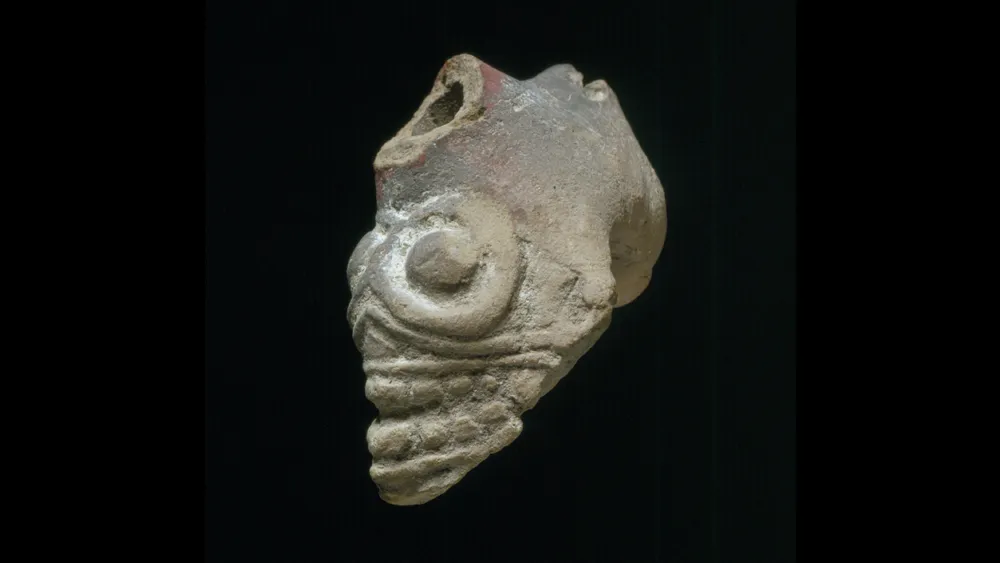
Ritual Aztec whistles produced a brain-scrambling "scream," according to a new study. The objects were used during human sacrifices and may have prepared victims for their supposed descent to Mictlan, the Aztec underworld.
The Aztecs created the small 1.2 to 2-inch-long (3 to 5 centimeters) skull-shaped whistles out of clay, possibly to represent Mictlantecuhtli, the Aztec lord of the underworld.
The skull whistles "trigger a medium level of urgency responses in listeners," and many listeners said the sound was akin to a "scream," study lead author Sascha Frühholz, a neuroscientist at the University of Zurich, said in a statement.
Archaeologists have recovered the whistles from the graves of people they assumed were sacrificial victims. "The whistles have a very unique construction, and we don't know of any comparable musical instrument from other pre-Columbian cultures," Frühholz said.
In the study, published Nov. 11 in the journal Communications Psychology, Frühholz and colleagues recruited 70 people to listen to more than 2,500 sound samples made by skull whistles.
Three of the whistles they used were modern reproductions, and the two others were whistles found at the Aztec site of Tlatelolco, near the Aztec capital of Tenochtitlán in what is now Mexico City.
The whistles all made "a shrill, piercing, and scream-like sound quality when played with intensive air pressure," the team wrote in the study.
Get the world’s most fascinating discoveries delivered straight to your inbox.
Related: Remains of Aztec dwelling and floating gardens unearthed in Mexico City
RELATED STORIES
The researchers also recorded the listeners' brains to identify which regions responded to the sounds.
The researchers discovered that the death whistle lit up brain regions associated with emotional responses and with identifying symbolic meaning. Aztec communities may therefore have used the scary sounds in specific ritual contexts, such as ceremonies involving death.
"Skull whistles might have been used to scare the human sacrifice or the ceremonial audience," the researchers wrote. However, there are limitations to the study that could benefit from further research, they noted.
"Unfortunately, we could not perform our psychological and neuroscientific experiments with humans from ancient Aztec cultures. But the basic mechanisms of affective response to scary sounds are common to humans from all historical contexts," Frühholz said.

Kristina Killgrove is a staff writer at Live Science with a focus on archaeology and paleoanthropology news. Her articles have also appeared in venues such as Forbes, Smithsonian, and Mental Floss. Kristina holds a Ph.D. in biological anthropology and an M.A. in classical archaeology from the University of North Carolina, as well as a B.A. in Latin from the University of Virginia, and she was formerly a university professor and researcher. She has received awards from the Society for American Archaeology and the American Anthropological Association for her science writing.