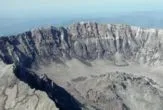
ANCHORAGE, Alaska (AP) -- An overflow of volcanic ash, rocks, water and ice from Mount Chiginagak was the cause for a puzzling absence of fish in King Salmon River this season, scientists said.
A 1,300-foot-wide crater lake near the summit gushed through its glacial rim earlier this summer, said volcanologist Janet Schaeffer.
The water remains so acidic that it would kill fish and be unrecognizable to salmon looking for home, said state commercial fishing biologist Paul Salomone, with the Department of Fish and Game.
"I think if there were fish in there when the event happened, they got toasted,'' he said.
King Salmon River's upper section drains the flank of the volcano and is part of a national wildlife refuge about 350 miles southwest of Anchorage.
The flow deposited ash and rock on the mountain's south glacier and flooded Indecision Creek before spreading downstream, according to volcanologists who studied the flow in late August and early September.
Fly-fishing guide Jon Kent had wondered what had gone wrong with King Salmon River when no lunkers showed up in June.
Sign up for the Live Science daily newsletter now
Get the world’s most fascinating discoveries delivered straight to your inbox.
"The whole river was starting to turn orange,'' said Kent, who's worked the Bristol Bay stream for 21 seasons. "There was this weird reddish foam and scum starting to come down the river.''
Kent took a boat upriver and discovered red gunk flushing from Volcano Creek into Mother Goose Lake and dead plants and a sulfuric stench further upstream. Fish, gulls and brown bears were all missing, he said.
"It's like someone dropped a bomb on the place,'' Kent said.
All five salmon species and other fish normally swim up the King Salmon River during the summer, said Kent, who runs Painter Creek Lodge.
Because the tainted waters no longer smelled or tasted like their natal stream, many fish probably went up other rivers, scientists said. They are not sure how many salmon tried to make it home.
Salmon returned to streams feeding the intertidal portion of the King Salmon River, Salomone said. And more than 1.2 million salmon were harvested this summer on the adjacent Ungashik River system, with an estimated 750,000 fish making it upstream to spawn.
When it became clear that no fish would be coming, Kent offered about 60 clients a chance to cancel or postpone their week-long fishing trips until next summer.
He also laid off his summer guides and kitchen staff.
"It's catastrophic business-wise, to say the least,'' he said. "You're losing this year and half of next.''
Chiginagak is a little-known volcano with no recent history of blowing its top or spewing lava.
There is no evidence that the 7,005-foot volcano is about to erupt, but scientists left behind a portable seismic station to gauge its movements.