













Air Bags Dangerous through Age 14

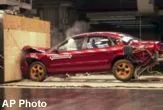
A new study finds that children 14 and younger should not sit in the front passenger seat of cars equipped with air bags. The current federal guideline is for children 12 and younger to sit in the back.
"Eight years ago, when the National Highway Traffic Safety Administration issued its recommendations, they were based on the best information (about air bag safety) available at the time," says Craig Newgard, assistant professor of emergency medicine at the Oregon Health & Science University. "Those warnings worked in reducing injuries to children. But, as a parent and emergency physician, I felt it was time to study whether more children could be at risk and assess whether age or body size were good measurement guidelines."
The National Highway Traffic Safety Administration said air bags have killed 175 people since 1990, with 104 of the deaths being among children. The agency says during that time there have been more than 3.3 million air bag deployments and 6,377 lives have been saved.
Newgard examined 3,790 cases in which children aged 1 month to 18 years who were seated in the right front seat and involved in motor vehicle crashes.
Air bags had a protective effect for children aged 15 to 18, the study found, but children 14 and younger were at high risk for serious injury from the air bags.
Newgard concludes that age may be a better indicator of risk than height or weight, because of body changes during puberty that affect muscle mass, bone density and bone mineral content.
The study is detailed in the June 6 edition of the American Academy of Pediatrics' journal Pediatrics. The results are consistent with several previous studies, according to a statement from the university.
Get the world’s most fascinating discoveries delivered straight to your inbox.
"When my 13-year-old nephew wants to sit in the front seat now, I won't let him," Newgard said.
Related Stories
- Drivers on Cell Phones Kill Thousands, Snarl Traffic
- Serious Golf Injuries on the Upswing ... Among Children
- 'Green' Car Sets Speed Record
