













Prairie Vole Study Offers Hope for Autism Treatment

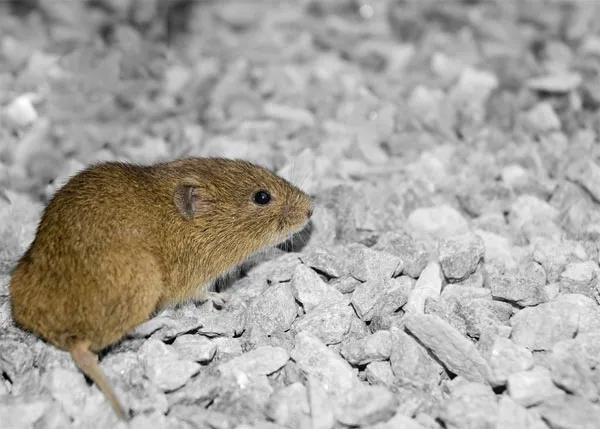
Researchers searching for new drugs to treat autism are getting help from a seemingly unlikely candidate: the prairie vole.
These small, furry creatures are one of the few species in nature that are monogamous and create a deep social bond while mating. The process by which these voles learn to bond with their mate may be a useful tool for finding new autism therapies, the researchers say. Autism is a disease characterized by difficulty communicating and interacting with others.
"The prairie vole model has enabled us to learn about complex neural pathways in social areas of the brain," said study researcher Larry Young, a professor of psychiatry at Emory University. "We believe these insights will be useful in identifying drugs that enhance social cognition and learning."
The researchers found giving female voles the drug D-cycloserine, which is thought to facilitate learning and memory, can encourage them to bond with a new male more quickly than usual.
The study will be published in an upcoming issue of the journal Biological Psychiatry.
For more than 15 years, Young and his colleagues have been studying the prairie vole as a model to explore the neurobiology of altruistic and other prosocial behaviors, including cooperation, compassion and bonding.
The basic mechanisms of voles' and humans' social learning are similar enough that the learning that occurs during voles' pair bonding can model complex human social interactions, Young said. The researchers have previously used voles to show the importance for social interactions of hormones such as oxytocin , which has also been proposed as a treatment for autism spectrum disorders .
Get the world’s most fascinating discoveries delivered straight to your inbox.
The bonding model works like this: sexually naïve females are placed with sexually experienced males for six hours of cohabitation. The females are not ovulating and no mating occurs. Normally, pair-bonding requires more time -- 24 hours -- and mating is necessary.
Later, the females are given a choice between spending time with the newly familiar male and a stranger; researchers then measure how much time they spend with each male over the next three hours.
When a low dose of the drug D-cycloserine is injected at the start of cohabitation, the female prefers the familiar male by a factor of at least four. Without the drug, the female doesn't markedly prefer either male.
Currently, there are no drugs that specifically target social deficits found in individuals with autism, Young notes. Most drugs now prescribed for individuals with autism were originally developed for other disorders such as depression or schizophrenia.
Pass it on: Prairie voles may help researchers find new drugs for autism.
- Beyond Vaccines: 5 Things that Might Really Cause Autism
- 'Love Hormone' Oxytocin Shows Promise for Treating Mental Illness
- Checkup at Age 1 Could Catch Early Autism Signs
Follow MyHealthNewsDaily on Twitter @MyHealth_MHND.
