















Why Is Dryer Lint Gray?
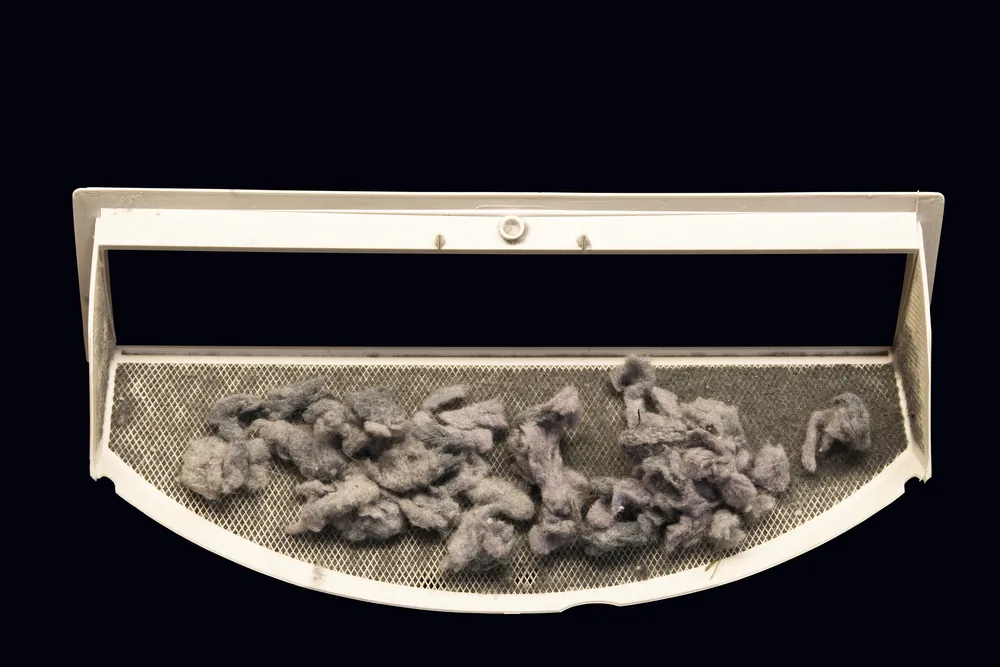
Lint is the accumulation of fibers that slough off clothing, linens and other textiles. When these fibers collect in clothes dryers, the majority of the time the resulting wad of fluff has a bluish-gray tint, despite the fact that your clothes come in myriad shades of green, red, tan, yellow, blue and so on.
The reason for the uniformity of color is that when you mix colors at random you end up with a muddy, dark mess. Melt a box of crayons together and you’ll see this for yourself. But when you mix clothes that are mostly blues, grays and blacks — as is typical with most wardrobes — with a smattering of reds, browns and greens, the mess becomes bluish gray every time. Essentially, the contributions of your blue jeans and white athletic socks outweigh those of your favorite red t-shirt.
Other than scraping the lint out of your dryer (or belly button) and tossing it in the garbage, is there anything you can you do with it? The fibers can actually help you start a life-saving fire in the wilderness should you ever get hopelessly lost in the woods. Blend the lint with a generous blob of petroleum jelly and keep it in a sealed plastic baggie. The flame from a single match will ignite it and the lint will burn for ample time while you add wood to your fire.
If you’re feeling really crafty, you can lift a bit from some old wool sweaters you no longer want to wear and make felt. Just soak the sweaters in some hot water, wring them out and place them in the dryer. Thoroughly clean the lint catcher before drying the sweaters and the wool lint you gather will be excellent raw material for homemade felt.
Get the world’s most fascinating discoveries delivered straight to your inbox.