Does Your Heart Really Stop When You Sneeze?
Get the world’s most fascinating discoveries delivered straight to your inbox.
You are now subscribed
Your newsletter sign-up was successful
Want to add more newsletters?
Delivered Daily
Daily Newsletter
Sign up for the latest discoveries, groundbreaking research and fascinating breakthroughs that impact you and the wider world direct to your inbox.
Once a week
Life's Little Mysteries
Feed your curiosity with an exclusive mystery every week, solved with science and delivered direct to your inbox before it's seen anywhere else.
Once a week
How It Works
Sign up to our free science & technology newsletter for your weekly fix of fascinating articles, quick quizzes, amazing images, and more
Delivered daily
Space.com Newsletter
Breaking space news, the latest updates on rocket launches, skywatching events and more!
Once a month
Watch This Space
Sign up to our monthly entertainment newsletter to keep up with all our coverage of the latest sci-fi and space movies, tv shows, games and books.
Once a week
Night Sky This Week
Discover this week's must-see night sky events, moon phases, and stunning astrophotos. Sign up for our skywatching newsletter and explore the universe with us!
Join the club
Get full access to premium articles, exclusive features and a growing list of member rewards.
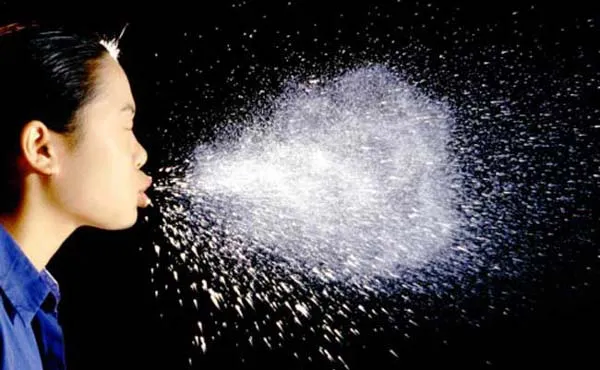
The idea that a sneeze stops your heart is up there with the ancient belief that a big ah-choo blows your soul right out of your nose . Both are myths with murky origins, and neither makes much sense. Sneezing or, if you like to impress your friend with big words, sternutation is a reflex centered in a section of the brainstem called the medulla. When something tickles the upper lining inside the nose, nerves carry the signal to the medulla, which then triggers the eyes to close, the chest to contract, and the lungs to expel a burst of air at speeds approaching 100 mph.
But one thing the brain doesn't do is signal the heart to stop. It keeps beating no matter how hard you sneeze . So sternutate away, but please, remember to cover your mouth first. That helps prevent the spread of disease, and besides, we wouldn't want your soul to get out.
Follow Live Science's Life's Little Mysteries @LLMysteries, Facebook & Google+.
Get the world’s most fascinating discoveries delivered straight to your inbox.

Stephanie Pappas is a contributing writer for Live Science, covering topics ranging from geoscience to archaeology to the human brain and behavior. She was previously a senior writer for Live Science but is now a freelancer based in Denver, Colorado, and regularly contributes to Scientific American and The Monitor, the monthly magazine of the American Psychological Association. Stephanie received a bachelor's degree in psychology from the University of South Carolina and a graduate certificate in science communication from the University of California, Santa Cruz.