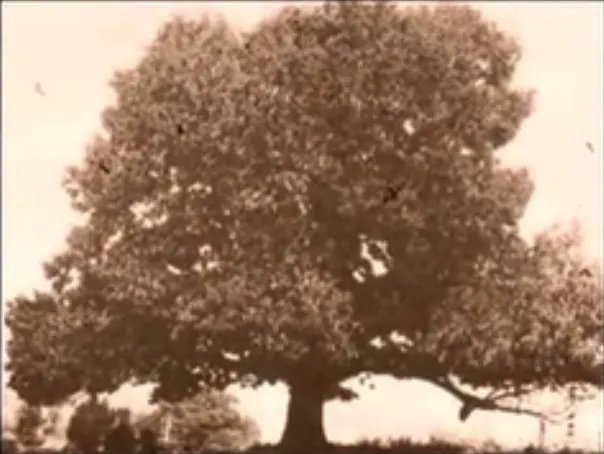
Once plentiful, the American chestnut tree has largely disappeared, killed off by a deadly fungus that began felling the trees 100 years ago.
This month, researchers from the SUNY College of Environmental Science and Forestry (ESF) in Syracuse, N.Y., are planning to plant 10 chestnut treeswith a tweaked gene that they believe will help the trees stave off the pathogen that brought their ruin.
William Powell, a plant biotechnology expert at ESF, and his colleague Charles Maynard, have incorporated a gene into the test trees that they derived from a breed of wheat. The gene has been shown to increase resistance in hybrid poplar trees to fungal pathogens.
The American chestnut tree was once a dominant species in the forests of the eastern United States; it accounted for 25 percent of the trees in the forest. A healthy chestnut tree can grow more than 100 feet (30 meters) tall and measure 10 feet (3 meters) in diameter.
A dead chestnut, killed off by blight.
(Image credit: SUNY-ESF.)
Not only do the trees produce chestnuts — great for feeding wildlife and humans alike — but their wood is rot-resistant and fast-growing, Powell said, which was important for the lumber industry.
"We really want to bring [the chestnut] back. The only way it can come back is to make a resistant tree, because no one has been able to control the blight any other way," Powell said in a statement.
The hybrid chestnut trees are slated to be planted at a test site in the New York Botanical Garden in the Bronx on April 18. The location is significant.
Sign up for the Live Science daily newsletter now
Get the world’s most fascinating discoveries delivered straight to your inbox.
"That's a stone's throw — literally across the street — from where the blight was discovered in 1904," Maynard said in a statement.
The trees slated to be planted in the Botanical Garden are among more than 100 varieties of transgenic American chestnuts that are being tested in field trials or waiting to be tested for blight resistance.
Follow OurAmazingPlanet for the latest in Earth science and exploration news on Twitter @OAPlanetand on Facebook.
For the science geek in everyone, Live Science offers a fascinating window into the natural and technological world, delivering comprehensive and compelling news and analysis on everything from dinosaur discoveries, archaeological finds and amazing animals to health, innovation and wearable technology. We aim to empower and inspire our readers with the tools needed to understand the world and appreciate its everyday awe.