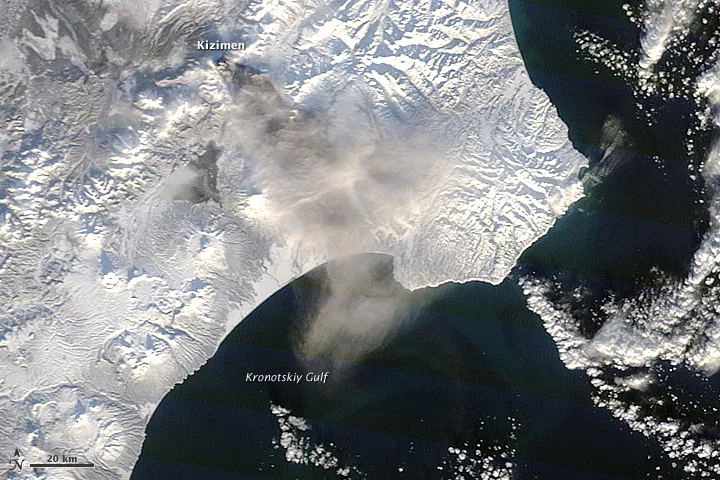
Kizimen, an isolated stratovolcano on Russia’s Kamchatka Peninsula, spewed ash nearly 10 kilometers (32,800 feet) into the air in mid-December 2011. Seismic activity and thermal anomalies increased near the volcano in early December, culminating in a fresh eruption starting on December 13. Kizimen has been erupting sporadically since 2009.
The Moderate Resolution Imaging Spectroradiometer (MODIS) instruments on NASA’s Terra and Aqua satellites captured these natural-color images on December 14, 2011. Terra passed over far eastern Russia first, at 11:05 a.m. local time, with Aqua following one hour and 50 minutes later. The time difference afforded a view of the movement of the ash plume as it blew to the south and east.
Observers with the Kamchatkan Volcanic Eruption Response Team detected lava flows and pyroclastic flows (hot avalanches of rock, ash, and water debris) on the eastern and northeastern flanks. According to scientists at the Russian Academy of Sciences, air temperatures were 32 degrees Centigrade near the summit, while air temperatures in the surrounding region were –26 degrees.
Itar-Tass reported potential disruptions to air traffic in the northwest Pacific, particularly for low-flying planes, as aviators were put on the highest (red) alert for ash and debris. The small abrasive particles in volcanic ash can get lodged in jet engines, causing engine failures. There was no threat, however, to local populations on the ground because of the remote location of Kizimen.
Sign up for the Live Science daily newsletter now
Get the world’s most fascinating discoveries delivered straight to your inbox.
For the science geek in everyone, Live Science offers a fascinating window into the natural and technological world, delivering comprehensive and compelling news and analysis on everything from dinosaur discoveries, archaeological finds and amazing animals to health, innovation and wearable technology. We aim to empower and inspire our readers with the tools needed to understand the world and appreciate its everyday awe.